

Dr. Belal Bin Asaf
Thoracic (Chest) Surgeon
Director, Institute of Chest Surgery,
Chest Onco-Surgery & Lung Transplantation, Medanta Hospital

-
 [email protected]
-
Follow Us:


Dr. Belal Bin Asaf
Thoracic (Chest) Surgeon
Director, Institute of Chest Surgery,
Chest Onco-Surgery & Lung Transplantation, Medanta Hospital
[email protected]


Blood in the cough is frightening, and Delhi residents searching for hemoptysis treatment in Delhi are usually looking for the fastest, most reliable path to an accurate diagnosis. It's worth being upfront: Dr. Belal Bin Asaf does not run a standalone clinic within Delhi city limits. He practises as Director of the Institute of Chest Surgery, Chest Onco-Surgery & Lung Transplantation at Medanta Superspecialty Hospital, Sector 50, Noida — a short drive from East and South-East Delhi via the DND Flyway or the Noida-Delhi border, and one of the more accessible super-specialty centres for Delhi patients needing advanced lung and airway care.
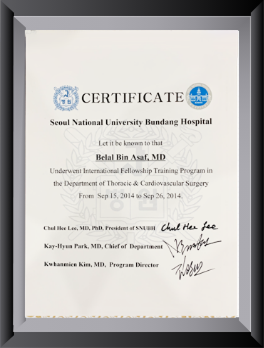
What makes the drive worthwhile is the depth of training behind the diagnosis: Dr. Asaf completed a fellowship in Thoracic Surgery at Seoul National University Bundang Hospital in South Korea, and today specialises in robotic thoracic surgery, VATS, lung cancer, and myasthenia gravis and thymoma treatment, with over 15 years of experience overall. For Delhi patients trying to find a genuine hemoptysis specialist in Delhi rather than a general referral, that combination of international training and hands-on thoracic surgery experience is exactly what a serious hemoptysis doctor in Delhi should offer.
Before anything else: if you are coughing up large volumes of blood, feel breathless, or feel faint, this is an emergency and you should go to the nearest capable emergency department immediately rather than searching for the right specialist online. The real danger in heavy hemoptysis isn't blood loss itself — it's that blood can fill the airways faster than it can be cleared, risking asphyxiation. For smaller amounts of blood-streaked sputum, urgent but non-emergency evaluation within a day or two is appropriate.
Hemoptysis is blood coughed up from the lungs or airways, distinct from hematemesis, which is blood vomited from the stomach or oesophagus. The two are sometimes confused by patients, but there are useful clues: hemoptysis tends to be bright red and frothy, mixed with mucus, and triggered by coughing; hematemesis is usually darker, may resemble coffee grounds, and comes up with vomiting rather than coughing. Getting this distinction right early shapes the entire diagnostic pathway, since one points to the lungs and the other to the digestive tract.
Delhi's patient population reflects the same causes seen across northern India, with tuberculosis — active, healed, or complicated by a fungal aspergilloma in an old cavity — remaining one of the most common findings. Other frequent causes include pneumonia, bronchiectasis, chronic bronchitis (which some Delhi patients notice worsens with seasonal air quality changes), lung cancer, pulmonary embolism, and occasionally injury to the chest. Because several of these causes overlap in symptoms, a proper workup rather than guesswork is essential.
Diagnosis usually starts with a chest X-ray, which can flag obvious abnormalities quickly. A CT scan of the chest, often performed as a CT angiogram, follows to localise precisely where the bleeding originates and to characterise the underlying lesion. Bronchoscopy allows direct visualisation of the airway and, in many cases, the bleeding site can be identified and even treated in the same sitting. Sputum analysis for TB and other infections rounds out the initial evaluation, since infection is such a common underlying driver in this region.
How aggressively hemoptysis is treated depends entirely on how much blood is involved and what's causing it. Streaky, minor hemoptysis is typically resolved by treating the underlying condition, whether that's an infection, bronchitis, or another chronic issue. Massive hemoptysis demands urgent stabilisation: protecting the airway and positioning the patient so the bleeding lung sits lower than the healthy one, preventing blood from spilling across. Bronchial artery embolization — a minimally invasive interventional radiology procedure — is usually the first treatment attempted to control significant bleeding. Surgical resection of the affected lung segment or lobe is kept in reserve, used when embolization doesn't control the bleeding, isn't available, or when there's a clearly localised surgical cause like an aspergilloma, a confined patch of bronchiectasis, or a tumour.
When surgery is the right answer, the surgeon's experience matters enormously. Dr. Asaf has over 15 years of dedicated thoracic surgery experience and was the first in India to perform a Robotic Subxiphoid Thymectomy — a marker of his standing in minimally invasive chest surgery generally. For hemoptysis patients who ultimately need a lung resection, that translates into VATS and robotic-assisted options that can mean smaller incisions, less pain, and faster recovery compared to traditional open surgery.
There's no point pretending otherwise: reaching Medanta Hospital in Sector 50, Noida from central or west Delhi involves a real commute. For patients in East Delhi, Noida-facing colonies, and areas near the DND Flyway or the Noida-Delhi border crossing, however, it's often one of the closer full-service thoracic surgery units available, frequently faster to reach than fighting across-town Delhi traffic to another hospital. Many patients start out searching for the best pulmonologist for hemoptysis in Delhi; the honest answer for complex or bleeding-related cases is often a thoracic surgical team like Dr. Asaf's, working alongside pulmonology rather than in place of it. Many Delhi families weigh this trade-off and choose Medanta Noida specifically because of the depth of expertise in complex airway bleeding and thoracic oncology available there.
If you're dealing with blood-streaked sputum, don't self-diagnose based on symptoms alone — an accurate diagnosis needs imaging and often bronchoscopy. For coughing blood treatment in Delhi that doesn't leave you waiting, call ahead to arrange an appointment with Dr. Belal Bin Asaf's team at Medanta Hospital, Sector 50, Noida, or go straight to an emergency room if the bleeding is heavy.
Prefer to book a consultation online right away? Dr. Belal Bin Asaf also sees patients for this condition in Noida and Gurgaon. Learn more about his full practice as thoracic surgeon in Delhi.


Medically Written & Reviewed By
Director, Institute of Chest Surgery, Chest Onco-Surgery & Lung Transplantation — trained at AIIMS, New Delhi, with a Thoracic Surgery fellowship at Seoul National University Bundang Hospital, South Korea; first surgeon in India to perform a Robotic Subxiphoid Thymectomy. View full credentials & experience →


Morning: 10:00AM - 2:00PM
Evening 4:00PM - 6:00PM(Mon to Sat)


