

Dr. Belal Bin Asaf
Thoracic (Chest) Surgeon
Director, Institute of Chest Surgery,
Chest Onco-Surgery & Lung Transplantation, Medanta Hospital

-
 [email protected]
-
Follow Us:


Dr. Belal Bin Asaf
Thoracic (Chest) Surgeon
Director, Institute of Chest Surgery,
Chest Onco-Surgery & Lung Transplantation, Medanta Hospital
[email protected]


Recognized for providing expert treatment of posterior mediastinal tumors in India, Dr. Belal Bin Asaf combines advanced thoracic surgical expertise with a patient-centered approach to achieve the best possible outcomes. He offers complete diagnosis, cutting-edge surgical management, and customized treatment for patients suffering from mediastinal tumors, with more than 20 years of expertise in conventional thoracic surgery and minimally invasive surgeries.
Dr. Belal Bin Asaf has extensive experience successfully treating a wide range of complex chest tumors. As a top posterior mediastinal tumor specialist in India, Dr. Bin Asaf is focused on achieving complete removal of tumors while also preserving vital structures and ensuring quicker recovery with minimally invasive techniques.
The mediastinum is the central compartment of the chest, located between the two lungs. It contains the heart along with several other vital structures, including the trachea, esophagus, thymus gland, major blood vessels, lymph nodes, and nerves. Together with the left and right pleural cavities, which house the lungs, the mediastinum forms one of the three main compartments of the thoracic cavity.
A posterior mediastinal tumor is a tumour that arises in the posterior mediastinum, which is the part of the central compartment (mediastinum) that lies behind the heart. Posterior mediastinal tumours may be benign or even malignant. While many of these tumors develop slowly and do not show symptoms at first, larger lesions may compress the surrounding organs, nerves, or even the spinal canal, which can cause serious problems. A prompt diagnosis and the right treatment of posterior mediastinal tumors in India are essential to improve the long-term outcome.
Many types of tumors could form within the posterior mediastinum, which include:
Every condition needs an individual assessment to determine the best treatment plan.
The majority of posterior mediastinal tumors can be detected on imaging. But larger tumors can cause symptoms due to compression of adjacent structures. Common symptoms are the following:
Patients suffering from these symptoms should seek treatment from a posterior mediastinal specialist in India immediately.
The precise cause of posterior mediastinal tumors remains unknown. Certain factors can make it more likely to develop the tumors:
Posterior mediastinal tumors are not preventable, so early detection is crucial.
An accurate diagnosis is vital before commencing any treatment. Dr. Belal Bin Asaf utilizes advanced diagnostic and imaging techniques to identify the extent, size, and nature of the cancer.
These tests help create an individualized posterior mediastinal lump treatment plan for every patient in India.
Treatment depends on:
Treatment options available include:
Surgery is the most common treatment for the majority of anterior mediastinal tumors.
Complete surgical removal is the greatest chance of treatment for benign tumors and a number of malignant lesions. The main goals of surgery are the following:
Dr. Belal Bin Asaf has vast experience in the surgery of posterior mediastinal tumors in India, treating even complicated tumors situated near major blood vessels, including the spinal canal and the esophagus, as well as vital nerves. He is one of the most experienced surgeons for robotic mediastinal surgery, including Robotic Surgery for Posterior Mediastinal Tumour.
A number of tumors in the posterior mediastinal region are now removed with minimally invasive video-assisted thoracoscopic surgery (VATS) as well as robotic-assisted surgery.
Benefits include:
As an early pioneer in robotic thoracic surgery, Dr. Belal Bin Asaf carefully designs the best treatment plan for each patient.
Are you diagnosed with a mediastinal tumor? Make an appointment with Dr. Belal Bin Asaf to discuss the most advanced treatment options.
These qualities have helped to establish Dr. Belal Bin Asaf as an entrusted surgeon for posterior mediastinal tumors throughout India.
The recovery of patients depends on the size of the tumor, type of surgery (open, VATS or robotic approach), any surgical complications, and overall patient health:
Make an appointment now to receive a thorough assessment and treatment based on your specific needs to treat posterior mediastinal cancers.
The successful mediastinal tumor therapy for patients in India requires a precise diagnosis, expert surgical knowledge, advanced imaging techniques, and multidisciplinary cancer treatment. Dr. Belal Bin Asaf provides an extensive treatment plan for mediastinal tumors in the posterior and anterior regions, employing internationally acclaimed treatments.
Dr. Belal Bin Asaf has extensive expertise in the surgical management of both benign and malignant thoracic tumors, including thymic tumors, mediastinal cysts, neurogenic tumors, and other chest tumors, using advanced minimally invasive and robotic surgical techniques.
There is no guarantee that every posterior mediastinal lesion is cancerous. Certain lesions are benign cysts, inflammation-related masses, or congenital anomalies. However, each lesion requires careful examination, as imaging alone can't always distinguish benign from malignant lesions.
Comprehensive posterior mediastinal lesion therapy in India starts with the most advanced imaging, assessment of the clinical situation, and individualized treatment plans. Surgery may be suggested in cases where the lesion is causing symptoms, is enlarging, or has unclear malignant potential.
Contact us today to discuss your medical condition and receive a customized treatment plan with an experienced thoracic surgeon.
Selecting the right surgeon is crucial in achieving the most effective results with mediastinal tumors. With a patient-care approach, Dr. Belal Bin Asaf employs advanced surgical techniques (robotic technology) to deliver comprehensive posterior mediastinal cancer treatment throughout India.
For the treatment of posterior mediastinal cancer in India, Dr. Belal Bin Asaf offers advanced surgical expertise and personalized care. Prioritizing patient safety and faster recovery, he administers advanced posterior mediastinal surgery to remove tumors in India.
Call us now or request an appointment online to meet Dr. Belal Bin Asaf and learn about the most advanced therapy for posterior mediastinal masses in India.
We are here for you! How can we help?

Director
Institute Of Chest Surgery, Chest
Onco-Surgery & Lung Transplantation
Dr. Belal Bin Asaf is a renowned Thoracic (Chest) Surgeon and Director of the Institute of Chest Surgery, Chest Onco-Surgery & Lung Transplantation at Medanta Superspecialty Hospital, Noida and Medanta – The Medicity, Gurugram. He specializes in Robotic Thoracic Surgery, VATS, Lung Cancer, Myasthenia Gravis & Thymoma treatment, and was the first surgeon in India to perform Robotic Subxiphoid Thymectomy.

Medically Written & Reviewed By
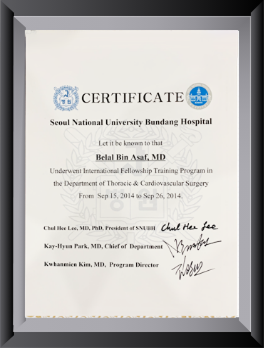
Director, Institute of Chest Surgery, Chest Onco-Surgery & Lung Transplantation — trained at AIIMS, New Delhi, with a Thoracic Surgery fellowship at Seoul National University Bundang Hospital, South Korea; first surgeon in India to perform a Robotic Subxiphoid Thymectomy. View full credentials & experience →


Morning: 10:00AM - 2:00PM
Evening 4:00PM - 6:00PM(Mon to Sat)


