

Dr. Belal Bin Asaf
Thoracic (Chest) Surgeon
Director, Institute of Chest Surgery,
Chest Onco-Surgery & Lung Transplantation, Medanta Hospital

-
 [email protected]
-
Follow Us:


Dr. Belal Bin Asaf
Thoracic (Chest) Surgeon
Director, Institute of Chest Surgery,
Chest Onco-Surgery & Lung Transplantation, Medanta Hospital
[email protected]


Persistent trouble swallowing is easy to dismiss until it isn't. For patients in Gurgaon exploring esophageal cancer treatment in Gurgaon, Dr. Belal Bin Asaf consults at Medanta – The Medicity, Sector 38, Gurugram, and serves as Director of the Institute of Chest Surgery, Chest Onco-Surgery & Lung Transplantation at Medanta Hospital, Noida (Sector 50). He was the first surgeon in India to perform a Robotic Subxiphoid Thymectomy, and over more than 15 years of practice has built a specialization in Robotic Thoracic Surgery, VATS, Lung Cancer, and Myasthenia Gravis & Thymoma treatment.
His practice focuses on complex thoracic cancers, and esophageal cancer — a disease of the food pipe that connects the throat to the stomach — sits squarely within that focus, particularly the surgical reconstruction that follows chemotherapy or chemoradiation. Patients looking for an experienced esophageal cancer doctor in Gurgaon often turn to him for exactly this combination of surgical precision and coordinated cancer care.
Not all esophageal cancers behave the same way, and the distinction matters clinically. Adenocarcinoma tends to develop lower down in the esophagus, near where it meets the stomach, and is closely tied to years of untreated acid reflux (GERD) and a lining change called Barrett's esophagus. Squamous cell carcinoma instead arises higher up, in the upper or middle esophagus, and is more strongly linked to smoking, alcohol, and habitually consuming very hot food or drink. Both are staged and treated through a similar clinical pathway, but knowing the type and location helps the surgical team plan the extent of resection and reconstruction required.
The most telling early symptom is dysphagia that worsens gradually — food (especially solids) feeling like it's catching on the way down, eventually making even liquids uncomfortable to swallow. This is frequently accompanied by weight loss that wasn't intentional, a persistent ache or pressure in the chest, regurgitating food after meals, and occasionally hoarseness if nerves near the voice box are affected. Because Gurgaon's professional population often has a high-stress, irregular-eating lifestyle that can mask or mimic reflux symptoms, dysphagia lasting beyond two to three weeks warrants a proper endoscopic evaluation rather than continued self-medication with antacids.
The diagnostic pathway starts with an upper GI endoscopy and biopsy — direct visualisation of the esophagus with tissue sampling to confirm malignancy. From there, staging is built through a combination of imaging: CT scans of the chest and abdomen to map local extent, PET-CT to rule out spread beyond the chest and abdomen, and endoscopic ultrasound (EUS), which gives the most precise read on how deeply the tumour has penetrated the esophageal wall and whether adjacent lymph nodes are involved. This combination of findings is what the tumour board uses to decide between upfront surgery, chemotherapy first, or a non-surgical systemic approach.
Early, superficial tumours can sometimes be managed with endoscopic resection or surgery alone, without the need for chemotherapy. Locally advanced tumours typically require neoadjuvant chemotherapy or chemoradiation to downstage the disease before an esophagectomy is performed — the operation in which the diseased portion of the esophagus is removed and the digestive tract reconstructed, most commonly using the stomach as a conduit. Wherever the tumour's stage and location allow, Dr. Belal performs this using minimally invasive or robotic-assisted surgical techniques, which are associated with less post-operative pain, lower complication rates, and faster recovery of swallowing function compared with open esophagectomy. For advanced or metastatic disease, systemic drug therapy becomes the primary treatment. Across every stage, care is coordinated through a multidisciplinary tumour board involving thoracic surgery, medical oncology, and gastroenterology, with nutritional support woven in throughout, since the disease itself interferes with normal eating.
Esophagectomy is one of the more technically complex procedures in thoracic surgery, and complication rates are known to correlate with how frequently a surgeon and their team perform it. Dr. Belal Bin Asaf's 15-plus years in thoracic onco-surgery, his standing as Director of the Institute of Chest Surgery at Medanta, and his distinction as the first surgeon in India to perform a Robotic Subxiphoid Thymectomy reflect a practice built specifically around advanced, minimally invasive chest and esophageal cancer surgery — not general surgery that occasionally includes it. For patients in Gurgaon's corporate and professional community, that specialisation, combined with access to robotic surgical technology, is often the deciding factor. It's this track record that has established him as a leading esophageal cancer specialist in Gurgaon, and as the name most often cited when patients ask their physicians who is the best oncologist for esophageal cancer in Gurgaon for surgical treatment.
Medanta – The Medicity in Sector 38, Gurugram — widely regarded as an esophageal cancer hospital in Gurgaon for its diagnostic and thoracic surgical infrastructure — sits along well-connected arterial roads, making it a practical option not only for patients across Gurugram itself but also for those commuting in from Manesar, Golf Course Road, and neighbouring South Delhi localities via NH-48. For a treatment course that involves multiple pre-op visits, imaging appointments, and follow-up consultations, that accessibility meaningfully reduces the logistical burden on patients and their families.
Ongoing swallowing difficulty, unexplained weight loss, or a recent biopsy-confirmed diagnosis are all reasons to seek a specialist opinion without delay. Contact Dr. Belal Bin Asaf's team at Medanta – The Medicity, Sector 38, Gurugram to schedule a consultation and understand your diagnosis, staging, and the treatment approach best suited to your condition.
Prefer to book a consultation online right away? Dr. Belal Bin Asaf also sees patients for this condition in Noida and Delhi. Learn more about his full practice as thoracic surgeon in Gurgaon.

Medically Written & Reviewed By
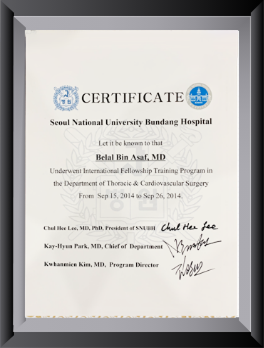
Director, Institute of Chest Surgery, Chest Onco-Surgery & Lung Transplantation — trained at AIIMS, New Delhi, with a Thoracic Surgery fellowship at Seoul National University Bundang Hospital, South Korea; first surgeon in India to perform a Robotic Subxiphoid Thymectomy. View full credentials & experience →


Morning: 10:00AM - 2:00PM
Evening 4:00PM - 6:00PM(Mon to Sat)


