

Dr. Belal Bin Asaf
Thoracic (Chest) Surgeon
Director, Institute of Chest Surgery,
Chest Onco-Surgery & Lung Transplantation, Medanta Hospital

-
 [email protected]
-
Follow Us:


Dr. Belal Bin Asaf
Thoracic (Chest) Surgeon
Director, Institute of Chest Surgery,
Chest Onco-Surgery & Lung Transplantation, Medanta Hospital
[email protected]
Coughing up blood, medically known as hemoptysis, may be caused by a minor respiratory illness or by a serious underlying lung condition. Recurrent bleeding, or bleeding associated with breathlessness, requires prompt medical assessment. Hemoptysis is a symptom rather than a diagnosis; identifying its cause is essential to choosing the right treatment.
Dr. Belal Bin Asaf, Director of the Institute of Chest Surgery, Chest Onco-Surgery & Lung Transplantation at Medanta Noida, offers visiting specialist thoracic surgical consultations in Srinagar. With over 15 years of thoracic surgery experience, he evaluates patients with persistent or recurrent hemoptysis, including bleeding associated with bronchiectasis, aspergilloma, tuberculosis-related lung damage and selected lung tumours.
Patients requiring advanced procedures may be referred to Medanta Hospital, Noida. Sudden heavy bleeding, breathing difficulty or rapidly worsening symptoms require immediate emergency assessment locally; patients should not wait for a visiting clinic.
Hemoptysis means coughing up blood originating from the lower respiratory tract, including the bronchi and lungs. It may appear as blood-streaked sputum, blood-tinged mucus, fresh blood, clots or sudden substantial bleeding.
True hemoptysis should be distinguished from bleeding from the nose, mouth or throat and from vomiting blood due to gastrointestinal bleeding. Appearance alone is not always reliable. Even when bleeding settles, an underlying cause may still need investigation.
Small streaks of blood may occur with bronchitis or other respiratory infections, but persistent or recurrent bleeding may signal bronchiectasis, tuberculosis, fungal disease or cancer. The urgency depends not only on the amount of blood but also on oxygenation, breathing, circulation and underlying lung function. Relatively modest bleeding may be dangerous in patients with severely compromised respiratory reserve.
Any new episode merits appropriate clinical assessment. Significant or ongoing bleeding is an emergency.
Active tuberculosis can cause hemoptysis. After successful treatment, residual cavities, fibrosis, bronchiectasis and abnormal blood vessels may continue to cause bleeding years later.
Permanently widened, damaged airways are prone to recurrent infection and abnormal bronchial arteries. This can cause repeated blood-streaked sputum or major episodes of bleeding.
An Aspergillus fungal ball can develop in an old pulmonary cavity, commonly after tuberculosis. Aspergilloma and other forms of chronic pulmonary aspergillosis may cause recurrent or occasionally severe hemoptysis.
Bleeding may accompany an airway or lung tumour. Persistent symptoms, weight loss, abnormal imaging and smoking history warrant careful evaluation, although lung cancer also occurs in never-smokers.
Pneumonia, lung abscess and other infections can injure inflamed respiratory tissues and blood vessels.
A blood clot in a pulmonary artery may cause hemoptysis, especially with sudden breathlessness or pleuritic pain. Less common vascular causes include pulmonary artery pseudoaneurysms and arteriovenous malformations.
Chronic bronchitis, airway trauma, broncholithiasis, certain autoimmune or cardiac diseases and bleeding disorders are additional possibilities. Anticoagulants and antiplatelet medicines can worsen bleeding from an existing lesion.
These symptoms can guide investigation but cannot reliably identify the diagnosis on their own.
Life-threatening hemoptysis is defined by its effects on breathing and circulation rather than by a single blood-volume threshold. Blood may obstruct the airways and cause suffocation even before major blood loss occurs.
Seek emergency medical care immediately. Do not drive yourself or travel long distances before stabilisation. If the bleeding side is known, medical personnel may position that lung downward to reduce contamination of the opposite lung.
During significant bleeding, stabilising the airway, oxygenation and circulation takes priority over routine imaging.
Doctors assess the amount and frequency of bleeding, prior tuberculosis, bronchiectasis, fungal disease, smoking, medications, accompanying symptoms and previous investigations. Vital signs and oxygen levels are checked.
Often an initial test to identify pneumonia, cavities or masses. A normal X-ray does not exclude important underlying pathology.
Helps identify bronchiectasis, cavities, aspergilloma, tumours, infection and other structural lung abnormalities.
May identify enlarged bronchial or non-bronchial systemic arteries, pulmonary vascular abnormalities and the likely bleeding region. It is especially valuable when significant or recurrent bleeding requires consideration of embolisation.
Flexible or rigid bronchoscopy may localise bleeding, visualise an airway lesion, obtain samples, clear clots and deliver selected measures to control active haemorrhage. It is not required in every minor episode.
Assessment may include blood count, platelets, coagulation tests, renal function, tuberculosis testing and targeted bacterial or fungal investigations.
Management depends on the cause, severity, source of bleeding and patient stability. Many patients can be treated without surgery.
Treatment may include antibiotics for bacterial infection, anti-tubercular therapy for active tuberculosis, antifungals for selected chronic pulmonary aspergillosis, and optimisation of bronchiectasis care. Blood-thinning medications must be reviewed by the treating team; patients should not alter them independently.
Emergency teams prioritise airway protection, oxygenation and circulation. Depending on the case, treatment may include intubation, bronchoscopic suction or clot removal, lung isolation, transfusion or correction of coagulopathy, and urgent interventional radiology.
An interventional radiologist guides a catheter through an arterial access site to abnormal vessels supplying the bleeding region and blocks them using embolic materials. BAE is often effective for significant or recurrent hemoptysis due to bronchiectasis, old tuberculosis, aspergilloma and other causes. Recurrence remains possible, and rare serious complications can occur if embolic material reaches unintended vessels.
Selected procedures may use suction, tamponade and other endobronchial methods to contain active bleeding or manage an airway lesion. Choice depends on source, expertise and available facilities.
Resection may benefit selected patients with well-localised and surgically treatable disease, including bronchiectasis, aspergilloma, damaged post-TB lung or certain tumours. It may be considered after recurrent bleeding despite embolisation or, rarely, as an emergency intervention when other methods fail.
Video-assisted thoracoscopic surgery can permit segmentectomy, lobectomy or other resections through small incisions when the anatomy is suitable. Dense post-TB adhesions and complex aspergilloma can make open thoracotomy preferable. Safety and completeness of treatment take priority over incision size.
An initial mild episode can usually be evaluated by a physician or pulmonologist. A thoracic surgical opinion helps determine whether removing an identified diseased area offers a meaningful benefit. Surgery is not necessary or suitable for every patient.
Old tuberculosis can leave cavities, fibrosis, bronchiectasis and altered vessels that bleed long after microbiological cure. Some cavities develop aspergilloma or chronic pulmonary aspergillosis. Hemoptysis after past tuberculosis does not automatically establish active TB.
Clinical assessment, suitable CT imaging and targeted infection testing help distinguish active tuberculosis from structural or fungal complications. Treatment may involve medication, embolisation or selected lung resection.
Yes. Recurrence depends on the underlying condition and its treatment. Embolisation controls the bleeding vessels but may not eliminate ongoing lung disease. Surgery can be more definitive in selected localised conditions, but cannot guarantee against future bleeding. Long-term follow-up is important.
Recovery is individualised. Mild infection-related bleeding may resolve with medication; patients treated by embolisation require observation appropriate to their condition. Surgery typically involves postoperative chest drainage, pain management, breathing exercises and mobilisation.
Follow-up may involve imaging, rehabilitation, chronic infection control, tuberculosis or antifungal care when indicated, smoking cessation and review for recurrent bleeding. Significant recurrent bleeding requires urgent reassessment.
Hemoptysis care is often multidisciplinary, involving pulmonologists, interventional radiologists, infectious disease specialists, critical care teams and thoracic surgeons. Dr. Belal Bin Asaf brings more than 15 years of thoracic surgery experience to the assessment of patients with localised bronchiectasis, aspergilloma, post-tuberculosis lung damage and lung tumours who may benefit from an operation.
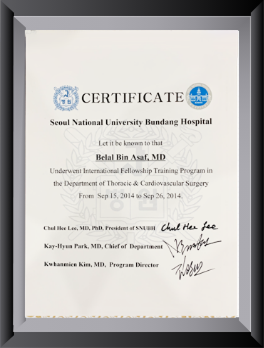
He trained as a Clinical Registrar in General Thoracic Surgery at AIIMS, New Delhi, and completed a thoracic surgery fellowship at Seoul National University Bundang Hospital, South Korea. His approach emphasises identifying the most appropriate treatment rather than recommending surgery indiscriminately.
Visiting outpatient clinic: New City Hospital, Tengpora Bypass, Srinagar. Scheduled third Saturday of each month, 9:00–11:00 AM and 2:00–5:00 PM. Please verify the next visit, location and timing before travelling, as schedules can change.
For a useful consultation, bring prior chest X-rays or CT/CT angiography, bronchoscopy reports, tuberculosis treatment records, microbiology findings, discharge summaries, previous embolisation details and a current medication list.
The visiting clinic is for specialist review, not management of an active emergency. Patients requiring advanced interventions or surgery may be referred to Medanta Hospital, Noida. Patients with significant ongoing bleeding should attend the nearest emergency department immediately.
It can be minor, but even limited bleeding warrants appropriate assessment, particularly when recurrent or accompanied by risk factors.
Yes. Residual bronchiectasis, cavities, scars and abnormal vessels may bleed years after treatment.
Yes. Medication, bronchoscopy and embolisation are sufficient in many patients.
There is no universal answer. It depends on the cause, severity, location and lung function.
It frequently controls bleeding, but recurrence can occur when underlying disease persists.
Selected localised conditions, including aspergilloma or bronchiectasis, and persistent bleeding despite other treatments may warrant resection.
Yes. Some patients develop recurrent or life-threatening bleeding.
Yes, but hemoptysis does not automatically mean cancer. Appropriate investigations are essential.
A physician or pulmonologist often performs initial assessment; thoracic surgery input helps when resection may be beneficial. Severe bleeding requires emergency multidisciplinary care.
Scheduled visiting consultations are available for assessment and review. Confirm arrangements in advance; do not delay emergency treatment.
If you have recurrent hemoptysis, past tuberculosis, bronchiectasis, aspergilloma or another structural lung condition, specialist review can clarify the cause and treatment options. Consult Dr. Belal Bin Asaf during the scheduled Srinagar OPD, or seek assessment at Medanta Hospital, Noida, when appropriate.
See the full thoracic surgeon in Srinagar OPD details, or book a consultation online.
Patient education only. This material does not replace individual clinical assessment. Heavy bleeding or difficulty breathing requires immediate emergency care.

Medically Written & Reviewed By
Director, Institute of Chest Surgery, Chest Onco-Surgery & Lung Transplantation — trained at AIIMS, New Delhi, with a Thoracic Surgery fellowship at Seoul National University Bundang Hospital, South Korea; first surgeon in India to perform a Robotic Subxiphoid Thymectomy. View full credentials & experience →


Morning: 10:00AM - 2:00PM
Evening 4:00PM - 6:00PM(Mon to Sat)


