

Dr. Belal Bin Asaf
Thoracic (Chest) Surgeon
Director, Institute of Chest Surgery,
Chest Onco-Surgery & Lung Transplantation, Medanta Hospital

-
 [email protected]
-
Follow Us:


Dr. Belal Bin Asaf
Thoracic (Chest) Surgeon
Director, Institute of Chest Surgery,
Chest Onco-Surgery & Lung Transplantation, Medanta Hospital
[email protected]


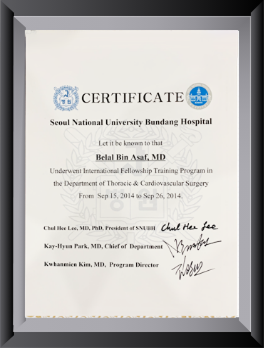
Residents of Delhi searching for pneumothorax treatment in Delhi should know upfront: Dr. Belal Bin Asaf does not run a clinic within Delhi's city limits. He practices as Director of the Institute of Chest Surgery, Chest Onco-Surgery & Lung Transplantation at Medanta Hospital, Sector 50, Noida, just across the Delhi border, and completed a fellowship in Thoracic Surgery at Seoul National University Bundang Hospital in South Korea before returning to build a practice many now regard as a leading pneumothorax doctor in Delhi and the wider NCR region. For a condition like a collapsed lung, where accurate diagnosis and, at times, surgical expertise matter far more than a nearby address, many Delhi patients choose to make that short trip rather than settle for a less specialized option closer to home.
With over 15 years of experience in thoracic surgery, Dr. Belal Bin Asaf specializes in Robotic Thoracic Surgery, Video-Assisted Thoracoscopic Surgery (VATS), lung cancer, and the treatment of myasthenia gravis and thymoma, alongside the full spectrum of pneumothorax care. It's this depth of sub-specialization — built through international fellowship training and applied at Medanta Hospital, Noida — that most Delhi patients are actually looking for when a collapsed lung turns out to need more than observation or a chest tube.
Pneumothorax is the medical term for a collapsed lung. It happens when air leaks into the pleural space — the thin gap between the outer surface of the lung and the inner chest wall — and that trapped air prevents the lung from expanding fully with each breath. Depending on how much air accumulates, the collapse can be minor and barely noticeable or severe enough to become a medical emergency.
Doctors classify pneumothorax by its underlying cause because the cause influences both risk and treatment:
Most people describe a pneumothorax as a sudden, sharp, stabbing chest pain on one side, paired with breathlessness that can worsen with movement or deep breathing. In tension pneumothorax, this escalates rapidly into severe respiratory distress, a fast and weak pulse, a dangerous fall in blood pressure, and can be fatal if not treated immediately. This is a genuine emergency — Delhi residents experiencing these symptoms should head to the nearest emergency room immediately rather than planning travel to a specialist first.
A standard chest X-ray usually confirms the diagnosis and shows how much of the lung has collapsed. When the picture is unclear, or in patients with recurring episodes or coexisting lung disease, a CT scan of the chest provides a much more detailed view, helping identify the exact blebs or structural issues responsible and guiding whether surgery will be needed.
Not every pneumothorax needs the same intervention. A very small collapse may simply be watched with repeat imaging, since the body often reabsorbs the trapped air on its own. Larger collapses require a chest tube (intercostal drain) placed through the chest wall to actively remove the air and re-inflate the lung. When the air leak keeps recurring or won't seal despite drainage, surgical treatment becomes the answer — specifically Video-Assisted Thoracoscopic Surgery (VATS), where Dr. Belal Bin Asaf removes the offending blebs through small keyhole incisions (bullectomy/blebectomy) and performs pleurodesis, sealing the pleural space to prevent the lung from collapsing again in the future.
Dr. Belal Bin Asaf has over 15 years of experience focused on chest and thoracic surgery, and he was the first surgeon in India to perform a Robotic Subxiphoid Thymectomy — a marker of the kind of advanced, minimally invasive technique he brings to conditions like recurrent pneumothorax. For Delhi patients, this means access to VATS-based surgical correction with smaller incisions, less post-operative pain, and quicker return to normal life, rather than settling for older open-surgery approaches that may be more readily available but far more invasive. It's why many patients who begin their search looking for the best pulmonologist for pneumothorax in Delhi end up consulting him instead — recurrent or complicated pneumothorax is frequently a surgical problem, and a pneumothorax specialist in Delhi with hands-on VATS experience is often the more decisive choice than medical management alone.
Medanta Hospital in Sector 50, Noida is one of the most straightforward specialist destinations for Delhi residents, particularly those in East Delhi, Mayur Vihar, Noida-Delhi border colonies, and areas along the DND Flyway, which connects directly into Noida within minutes. For South and Southwest Delhi residents, Medanta – The Medicity in Sector 38, Gurugram is often the closer of the two options via NH48. For many, either facility effectively functions as their nearest pneumothorax hospital in Delhi, given how close both sit to the city border and how quickly they can be reached from most residential pockets of the capital. Either route keeps the total travel time reasonable, and appointments can be scheduled around your journey.
If you're dealing with chest pain, breathlessness, or a pneumothorax that keeps recurring, don't let the absence of a Delhi-based clinic delay proper care. Book a consultation with Dr. Belal Bin Asaf at Medanta Hospital, Noida, to get a clear diagnosis and, if needed, a minimally invasive surgical plan built for lasting results.
Prefer to book a consultation online right away? Dr. Belal Bin Asaf also sees patients for this condition in Noida and Gurgaon. Learn more about his full practice as thoracic surgeon in Delhi.



Medically Written & Reviewed By
Director, Institute of Chest Surgery, Chest Onco-Surgery & Lung Transplantation — trained at AIIMS, New Delhi, with a Thoracic Surgery fellowship at Seoul National University Bundang Hospital, South Korea; first surgeon in India to perform a Robotic Subxiphoid Thymectomy. View full credentials & experience →


Morning: 10:00AM - 2:00PM
Evening 4:00PM - 6:00PM(Mon to Sat)


