

Dr. Belal Bin Asaf
Thoracic (Chest) Surgeon
Director, Institute of Chest Surgery,
Chest Onco-Surgery & Lung Transplantation, Medanta Hospital

-
 [email protected]
-
Follow Us:


Dr. Belal Bin Asaf
Thoracic (Chest) Surgeon
Director, Institute of Chest Surgery,
Chest Onco-Surgery & Lung Transplantation, Medanta Hospital
[email protected]


Delhi's air quality and the region's historically high burden of tuberculosis make chronic lung conditions like bronchiectasis a genuine concern for many residents. While Dr. Belal Bin Asaf does not operate a clinic within Delhi city limits, patients seeking specialised bronchiectasis treatment in Delhi are welcomed at his unit at Medanta Hospital, Sector 50, Noida — a short drive across the DND Flyway or the Noida–Delhi border — where he holds the position of Director of the Institute of Chest Surgery, Chest Onco-Surgery & Lung Transplantation at Medanta Hospital, Noida (Sector 50).
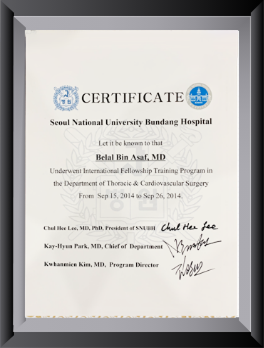
His surgical training reflects that same pursuit of specialisation: after early clinical training in thoracic surgery in India, Dr. Belal Bin Asaf completed a fellowship in Thoracic Surgery at Seoul National University Bundang Hospital, South Korea, before returning to build over 15 years of practice centred on robotic thoracic surgery, VATS, lung cancer, and myasthenia gravis & thymoma treatment. It is this combination of international fellowship training and a high surgical caseload that draws Delhi patients across the border for a second opinion or a full evaluation, even for a condition as complex as bronchiectasis.
Bronchiectasis develops when the walls of the bronchi — the airway tubes that carry air into the lungs — become permanently damaged, widened, and scarred. This structural change impairs the lungs' natural mucus-clearing mechanism, allowing secretions to accumulate inside the airways. Trapped mucus provides an ideal environment for bacteria to multiply, and the result is a self-perpetuating cycle: infection damages the airway further, which impairs clearance further, which invites more infection. Because the airway damage itself cannot be reversed, treatment focuses on breaking this cycle and preventing further deterioration.
A large proportion of bronchiectasis cases seen in Delhi and across North India trace back to previous severe respiratory infections in childhood, or to prior tuberculosis, which remains one of the most significant contributors to this disease in the Indian setting. Beyond infection, bronchiectasis can also arise from:
The classic presentation is a long-standing cough that brings up unusually large amounts of sputum every day — often the single clue that distinguishes bronchiectasis from an ordinary cough. Alongside this, patients frequently report repeated chest infections, breathlessness on exertion, ongoing fatigue, wheezing, and, in some cases, blood-streaked sputum or frank hemoptysis. Given Delhi's air pollution levels, many patients notice their symptoms worsen further during high-pollution periods, which can make it harder to distinguish a bronchiectasis flare from a pollution-related irritation — another reason a formal diagnosis matters.
Diagnosis begins with a high-resolution CT (HRCT) scan of the chest, which remains the gold-standard test for confirming bronchiectasis and precisely mapping which lung segments are affected. This is complemented by sputum culture testing to identify the bacteria responsible for recurrent infections, pulmonary function testing to gauge the degree of lung impairment, and further tests aimed at uncovering an underlying cause — including immunoglobulin levels, evaluation for ABPA, and a detailed history of any past tuberculosis treatment. Many patients begin this process by searching for the best pulmonologist for bronchiectasis in Delhi; because a subset of bronchiectasis cases ultimately need surgical rather than purely medical management, having direct access to a dedicated thoracic surgeon alongside pulmonology input adds an important layer of care.
Most patients with bronchiectasis are managed without surgery. Standard medical care includes structured airway clearance and chest physiotherapy to help clear retained secretions, antibiotic therapy during infective exacerbations, bronchodilators to relieve breathlessness, and treatment of any identified underlying condition.
Surgery becomes relevant only in a specific subset of patients — those with bronchiectasis confined to a single lobe or segment, those experiencing recurrent, severe hemoptysis unresponsive to medical treatment, or those with a badly damaged lung segment that continues to cause infections despite optimal medical therapy. For these carefully selected patients, Dr. Belal Bin Asaf offers minimally invasive surgical resection using VATS and robotic techniques, removing the diseased portion of lung while sparing healthy tissue wherever possible.
Dr. Belal Bin Asaf is a Director-level thoracic surgeon with more than 15 years of focused experience in chest surgery, and holds the distinction of being the first surgeon in India to perform a robotic subxiphoid thymectomy. Because he does not see patients within Delhi city itself, many refer to him simply as their bronchiectasis specialist in Delhi even though his unit is based just across the border in Noida. For Delhi patients weighing whether their bronchiectasis truly needs surgical intervention, this level of sub-specialisation matters: it means an honest, experienced assessment of whether medical management alone will suffice, or whether a minimally invasive resection is genuinely warranted — rather than a one-size-fits-all recommendation.
Medanta Hospital, Sector 50, Noida, is readily reachable from most parts of Delhi via the DND Flyway or the Noida–Delhi border crossings, with typical travel times comparable to crossing between many South and East Delhi neighbourhoods. Patients from Central, South, and East Delhi in particular find this route straightforward. Since a dedicated bronchiectasis hospital in Delhi with this level of thoracic surgical sub-specialisation does not exist within city limits, Medanta Hospital, Sector 50, Noida, effectively serves as the nearest full-service option — meaning Delhi residents do not have to compromise on the quality or specialisation of their thoracic surgical care simply because a dedicated chest surgery unit does not yet exist within the city itself.
Persistent cough with daily sputum, or infections that keep coming back, deserve a proper diagnosis. Book a consultation with Dr. Belal Bin Asaf at Medanta Hospital, Sector 50, Noida — easily accessible from Delhi — to get a clear picture of your condition and the right treatment path forward.
Prefer to book a consultation online right away? Dr. Belal Bin Asaf also sees patients for this condition in Noida and Gurgaon. Learn more about his full practice as thoracic surgeon in Delhi.

Medically Written & Reviewed By
Director, Institute of Chest Surgery, Chest Onco-Surgery & Lung Transplantation — trained at AIIMS, New Delhi, with a Thoracic Surgery fellowship at Seoul National University Bundang Hospital, South Korea; first surgeon in India to perform a Robotic Subxiphoid Thymectomy. View full credentials & experience →


Morning: 10:00AM - 2:00PM
Evening 4:00PM - 6:00PM(Mon to Sat)


