

Dr. Belal Bin Asaf
Thoracic (Chest) Surgeon
Director, Institute of Chest Surgery,
Chest Onco-Surgery & Lung Transplantation, Medanta Hospital

-
 [email protected]
-
Follow Us:


Dr. Belal Bin Asaf
Thoracic (Chest) Surgeon
Director, Institute of Chest Surgery,
Chest Onco-Surgery & Lung Transplantation, Medanta Hospital
[email protected]


Between demanding work schedules and the general assumption that "it's just a lingering cough," bronchiectasis often goes undiagnosed for years in busy professionals across Gurugram. Those seeking thorough, specialist-led bronchiectasis treatment in Gurgaon can consult Dr. Belal Bin Asaf — the first surgeon in India to perform a robotic subxiphoid thymectomy — at Medanta – The Medicity, Sector 38, Gurugram.
Dr. Belal Bin Asaf serves as Director of the Institute of Chest Surgery, Chest Onco-Surgery & Lung Transplantation at Medanta Hospital, Noida (Sector 50), and brings over 15 years of thoracic surgery experience to every case, with a sub-specialty focus on robotic thoracic surgery, VATS, lung cancer, and myasthenia gravis & thymoma treatment. This depth of training — and the surgical precision it reflects — is central to how he approaches complex, surgically nuanced conditions such as bronchiectasis.
Think of the airways in your lungs as a branching network of tubes that carry air in and out, and that are normally lined with a self-cleaning mechanism to sweep out mucus and debris. In bronchiectasis, sections of these tubes become permanently stretched out, scarred, and floppy. That damaged architecture can no longer clear mucus properly, so it pools inside the airway instead. Pooled mucus is fertile ground for bacterial growth, and each resulting infection damages the airway wall a little further — a self-reinforcing cycle. Because the airway widening itself is irreversible once it has occurred, the goal of treatment is to control the cycle, not to "cure" the underlying structural change.
The most frequent cause in India, including among patients seen at Gurugram-based practices, is prior severe infection — particularly a history of tuberculosis, which continues to be a major contributor to bronchiectasis nationally, along with severe pneumonia earlier in life. Other established causes include immune deficiency states, allergic bronchopulmonary aspergillosis (ABPA), autoimmune and connective tissue diseases, and ciliary dysfunction disorders that impair the airway's natural cleaning mechanism. Cystic fibrosis is a recognised but comparatively uncommon cause in Indian patients. In a portion of cases, no clear trigger is ever found, and the diagnosis remains idiopathic.
For many patients — including working professionals in Gurugram's corporate and tech sectors who initially dismiss it as stress-related or seasonal — the tell-tale sign is a daily cough producing noticeably large amounts of sputum, sometimes described as filling a cup over the course of a day. This is usually accompanied by breathlessness that limits exertion, recurring chest infections that respond only temporarily to antibiotics, fatigue that doesn't improve with rest, occasional wheeze, and, in more advanced cases, coughing up blood. A pattern of "one chest infection after another" over several years is a strong reason to get evaluated rather than simply treating each episode in isolation. Many patients start this journey by searching for the best pulmonologist for bronchiectasis in Gurgaon; because bronchiectasis sometimes needs surgical rather than purely medical management, direct access to a thoracic surgical specialist alongside pulmonology input is an important advantage.
The evaluation begins with a high-resolution CT (HRCT) scan of the chest — the definitive imaging test that visualises the dilated, thickened airways and shows precisely how much of the lung is involved. Alongside this, a sputum culture identifies which organisms are driving repeated infections and guides antibiotic choice, pulmonary function tests measure how much lung function has been affected, and additional testing looks for an underlying cause, including immunoglobulin levels, ABPA-specific tests, and a review of past tuberculosis exposure or treatment.
The backbone of bronchiectasis treatment is medical management: structured chest physiotherapy and airway clearance techniques performed regularly, antibiotics targeted at flare-ups, bronchodilators to ease breathing, and specific treatment of any underlying cause that is identified.
Surgical resection is reserved for a select group of patients — those whose disease is localised to one lobe or segment rather than spread throughout the lungs, those with recurrent, severe hemoptysis that has not responded to medical treatment, or those with a chronically destroyed lung segment that keeps causing infections despite optimal medical therapy. In these carefully chosen cases, Dr. Belal Bin Asaf — a bronchiectasis specialist in Gurgaon with sub-specialty thoracic training — performs minimally invasive lobectomy or segmentectomy using VATS and robotic-assisted techniques, aiming to remove only the affected lung tissue while preserving healthy lung wherever possible.
With more than 15 years of dedicated experience in thoracic surgery and the distinction of being the first surgeon in India to perform a robotic subxiphoid thymectomy, Dr. Belal Bin Asaf brings advanced minimally invasive expertise to complex chest conditions, including surgically complicated bronchiectasis. For patients in Gurugram, this means access to both careful, individualised medical management and, when genuinely needed, robotic and VATS surgical options performed by a surgeon with sub-specialty focus in thoracic disease — not a generalist approach.
As a leading bronchiectasis hospital in Gurgaon, Medanta – The Medicity, Sector 38, Gurugram, is centrally positioned along Golf Course Road, making it readily accessible for residents of DLF Phases, Sohna Road, Golf Course Extension, and Manesar, as well as for South Delhi patients who find Gurugram a shorter, less congested commute than crossing into Noida. For bronchiectasis patients, who typically need periodic physiotherapy check-ins, sputum monitoring, and follow-up imaging, this proximity within the Gurugram–South Delhi corridor makes sustained, long-term care far more manageable.
A daily cough with heavy sputum production, or chest infections that keep recurring, are not something to push through indefinitely. Book a consultation with Dr. Belal Bin Asaf at Medanta – The Medicity, Sector 38, Gurugram, for a complete diagnostic evaluation and a treatment plan suited to your specific case.
Prefer to book a consultation online right away? Dr. Belal Bin Asaf also sees patients for this condition in Noida and Delhi. Learn more about his full practice as thoracic surgeon in Gurgaon.

Medically Written & Reviewed By
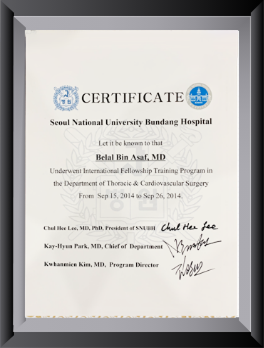
Director, Institute of Chest Surgery, Chest Onco-Surgery & Lung Transplantation — trained at AIIMS, New Delhi, with a Thoracic Surgery fellowship at Seoul National University Bundang Hospital, South Korea; first surgeon in India to perform a Robotic Subxiphoid Thymectomy. View full credentials & experience →


Morning: 10:00AM - 2:00PM
Evening 4:00PM - 6:00PM(Mon to Sat)


