

Dr. Belal Bin Asaf
Thoracic (Chest) Surgeon
Director, Institute of Chest Surgery,
Chest Onco-Surgery & Lung Transplantation, Medanta Hospital

-
 [email protected]
-
Follow Us:


Dr. Belal Bin Asaf
Thoracic (Chest) Surgeon
Director, Institute of Chest Surgery,
Chest Onco-Surgery & Lung Transplantation, Medanta Hospital
[email protected]


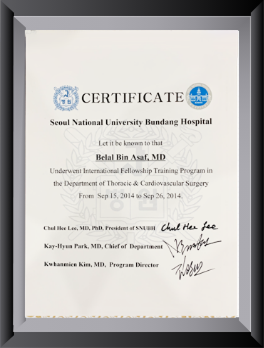
Many Delhi families searching for empyema treatment in Delhi are dealing with a frightening situation: a loved one hospitalized for pneumonia who isn't recovering, with doctors now mentioning "fluid around the lung" or "empyema." The specialist leading that care, Dr. Belal Bin Asaf, completed a fellowship in Thoracic Surgery at Seoul National University Bundang Hospital, South Korea, and went on to become the first surgeon in India to perform a robotic subxiphoid thymectomy — expertise he now applies as Director of the Institute of Chest Surgery, Chest Onco-Surgery & Lung Transplantation at Medanta Hospital, Noida.
While there is no dedicated thoracic surgery clinic within Delhi city limits, patients across the capital are just a short drive from one of the most experienced thoracic surgical teams in the region — Dr. Belal Bin Asaf and the Institute of Chest Surgery at Medanta Hospital, Noida, easily reached from East and South Delhi via the DND Flyway. This page walks through what empyema is, why it demands urgent attention, and how Delhi patients can access advanced treatment without unnecessary delay.
Around each lung sits a thin membrane-lined space called the pleura, which under normal conditions contains only a small amount of lubricating fluid. Empyema is what happens when this space becomes filled instead with infected, pus-like fluid — almost always as a complication of pneumonia that has been present long enough, or gone untreated long enough, for the infection to spread from the lung tissue into the surrounding cavity. It is not a separate illness that appears independently; it is what pneumonia can turn into when it wins the battle against initial treatment. Once pus accumulates, the problem stops being purely infectious and becomes mechanical too, since the fluid begins to physically restrict the lung.
Empyema unfolds in three recognized stages. The first, exudative stage, involves thin infected fluid that is still straightforward to drain. Without adequate treatment, this progresses to the fibrinopurulent stage, in which fibrin deposits divide the space into multiple separate pockets, or loculations, each of which may need to be addressed individually. If it continues further, the organizing stage sets in, where a tough fibrous shell forms around the lung and physically traps it, restricting its ability to expand even if the underlying infection is later brought under control. Common triggers include pneumonia treated late or with an inadequate antibiotic course, infections following chest surgery, trauma to the chest, and infections that have spread from elsewhere in the body.
The clinical picture usually resembles pneumonia that refuses to settle. Patients typically have recurring or persistent fever with chills, chest pain — frequently sharper with deep breaths or coughing — shortness of breath, a lingering cough, and marked fatigue. The single most reliable red flag is a pneumonia patient who has been on proper antibiotics for several days and simply isn't turning the corner; that failure to respond is often the clue that pus, not just infected fluid, has developed.
A chest X-ray is usually the first test, and it often shows blunting or fluid buildup around the lung base. From there, chest ultrasound or CT scanning is used to define the situation more precisely — particularly whether the fluid remains free-flowing or has already organized into separate loculated pockets, which changes the treatment plan considerably. Thoracentesis, where a fine needle draws off a sample of the pleural fluid, provides the definitive answer: the fluid's pH, glucose and LDH levels, along with gram stain and culture results, tell the surgical team exactly what stage the disease has reached.
Not every empyema needs an operation. Caught early, in the exudative stage, many cases are managed successfully with a course of intravenous antibiotics paired with chest tube drainage to evacuate the infected fluid. The complication is that a large share of patients are not diagnosed until the disease has already become loculated or has started forming a fibrous peel — at that point, drainage tubes alone generally fail, and surgical decortication becomes necessary. Dr. Belal Bin Asaf specializes in VATS (video-assisted thoracoscopic surgery) decortication, a keyhole approach that clears out the infected material and the restrictive peel and allows the lung to re-expand, avoiding the larger incision and slower recovery of traditional open thoracotomy wherever it is safely possible. Postponing surgical treatment allows the infection to persist and can leave the lung permanently unable to expand fully, so timing matters.
Dr. Belal Bin Asaf directs the Institute of Chest Surgery, Chest Onco-Surgery & Lung Transplantation at Medanta, and has more than 15 years dedicated to thoracic surgery, with particular expertise in robotic and minimally invasive chest procedures — he was the first surgeon in India to perform a robotic subxiphoid thymectomy. Delhi patients searching for an empyema doctor in Delhi, or an empyema specialist Delhi families can rely on, often find that this combination of surgical volume, technical range, and specific focus on complex pleural and lung disease is difficult to match within a short travel distance of the city.
To be clear about geography: Dr. Belal Bin Asaf does not operate a clinic inside Delhi itself. What Delhi residents do have is unusually convenient access to Medanta Hospital in Sector 50, Noida, just across the Delhi-Noida border. Patients from East Delhi, Central Delhi, and South Delhi commonly reach the hospital via the DND Flyway or the connecting Noida-Delhi routes, typically within a comparable or shorter drive than crossing to hospitals on the far side of Delhi itself. For a condition where imaging and pleural fluid analysis need to happen without delay, that proximity is a genuine practical advantage rather than an inconvenience. Many patients begin by searching for the best pulmonologist for empyema Delhi has to offer, or the nearest empyema hospital in Delhi; what they find instead is that the most experienced pleural infection surgical team is a short drive away at Medanta, Noida, just across the Delhi border.
If a pneumonia diagnosis in your family has stalled, or imaging has already shown fluid around the lung, get it assessed properly and promptly. Reach out to arrange a consultation with Dr. Belal Bin Asaf at Medanta Hospital, Noida — a short journey from Delhi for care that shouldn't wait.
Prefer to book a consultation online right away? Dr. Belal Bin Asaf also sees patients for this condition in Noida and Gurgaon. Learn more about his full practice as thoracic surgeon in Delhi.


Medically Written & Reviewed By
Director, Institute of Chest Surgery, Chest Onco-Surgery & Lung Transplantation — trained at AIIMS, New Delhi, with a Thoracic Surgery fellowship at Seoul National University Bundang Hospital, South Korea; first surgeon in India to perform a Robotic Subxiphoid Thymectomy. View full credentials & experience →


Morning: 10:00AM - 2:00PM
Evening 4:00PM - 6:00PM(Mon to Sat)


