

Dr. Belal Bin Asaf
Thoracic (Chest) Surgeon
Director, Institute of Chest Surgery,
Chest Onco-Surgery & Lung Transplantation, Medanta Hospital

-
 [email protected]
-
Follow Us:


Dr. Belal Bin Asaf
Thoracic (Chest) Surgeon
Director, Institute of Chest Surgery,
Chest Onco-Surgery & Lung Transplantation, Medanta Hospital
[email protected]


A lung nodule showing up on your chest X-ray or CT report is one of the most common reasons patients in Noida are referred to a chest specialist — and also one of the most anxiety-inducing. If you or a family member has been told a "spot" or "shadow" was found on a scan, Dr. Belal Bin Asaf, Director of the Institute of Chest Surgery, Chest Onco-Surgery & Lung Transplantation at Medanta Hospital, Noida (Sector 50), offers focused, evidence-based lung nodules treatment in Noida, from first read of the scan through to minimally invasive surgery if it's ever needed.
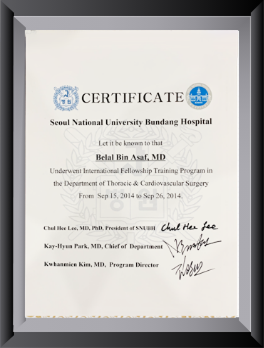
Dr. Belal Bin Asaf trained as a Clinical Registrar in General Thoracic Surgery at AIIMS, New Delhi, and went on to complete a fellowship in Thoracic Surgery at Seoul National University Bundang Hospital, South Korea, before becoming the first surgeon in India to perform a Robotic Subxiphoid Thymectomy. With more than 15 years of experience and a practice centered on Robotic Thoracic Surgery, VATS, lung cancer, and myasthenia gravis & thymoma treatment, he is regarded as a leading lung nodule specialist Noida patients turn to, and for many families searching for a dependable lung nodule doctor in Noida, that combination of training and hands-on surgical volume is exactly what settles the decision of where to go next.
A pulmonary nodule is a small, rounded spot in the lung tissue, generally under 3 cm across, picked up on a chest X-ray or CT scan. The overwhelming majority turn out to be benign — old scars from a past tuberculosis infection, calcified granulomas, or harmless growths called hamartomas are the usual culprits, especially in a country like India where healed TB findings on CT are extremely common. A smaller proportion represent early lung cancer or another condition needing active treatment, which is why every nodule deserves a proper look rather than being dismissed or ignored.
Several factors influence how a nodule should be interpreted. Smoking history — including how many years and how much was smoked — raises the probability of malignancy considerably. Age matters too: nodules in patients over 50 carry more weight than the same finding in a 30-year-old. A personal history of any prior cancer, a family history of lung cancer, and occupational exposure to dust, fumes, or industrial pollutants (relevant for many working professionals in Noida's industrial and IT sectors) all factor into the risk assessment. Interestingly, most nodules are found by accident — during a health check-up CT, a pre-employment scan, or imaging done for an unrelated chest infection or injury.
Not every nodule needs the same urgency. Features that lean toward benign include a small size (under 6-8 mm), smooth round borders, dense calcification visible on CT, and a nodule that has stayed exactly the same size over two or more years of comparison scans. Features that raise concern include an irregular or spiculated (spiky) border, larger size, a part-solid or ground-glass appearance, and — most importantly — any nodule that is growing when compared against an older scan. Dr. Belal Bin Asaf reviews the actual CT images, not just the report, and compares them against any prior imaging you can provide, since growth rate over time is often the single most telling clue.
Evaluation typically starts with a dedicated CT chest to characterize the nodule's size, shape, density, and location precisely. For nodules with higher-risk features, a PET-CT may be recommended to check for metabolic activity suggestive of malignancy. Small, indeterminate nodules that don't clearly look benign or worrying are often placed on a structured surveillance schedule — follow-up CT scans at defined intervals, similar to internationally recognized Fleischner Society guidelines, to watch for any change. When a nodule looks genuinely suspicious, tissue diagnosis becomes necessary, obtained through a CT-guided needle biopsy, navigational bronchoscopy, or, when other methods aren't conclusive, a VATS (video-assisted thoracoscopic surgery) wedge resection that removes and diagnoses the nodule in a single minimally invasive procedure.
Management is tailored to the individual nodule, not applied as a blanket protocol. Low-risk, small nodules are often simply watched with periodic imaging — no surgery, no unnecessary intervention, just careful monitoring so nothing is missed. When a nodule needs tissue confirmation or definitive removal, Dr. Belal Bin Asaf performs minimally invasive VATS or robotic-assisted wedge resection and segmentectomy, sparing as much healthy lung tissue as possible while removing the nodule completely. These keyhole techniques translate into smaller incisions, less postoperative pain, and meaningfully faster recovery compared to traditional open thoracotomy.
Dr. Belal Bin Asaf is Director of the Institute of Chest Surgery, Chest Onco-Surgery & Lung Transplantation at Medanta Hospital, Noida, with over 15 years of dedicated experience in thoracic surgery. He was the first surgeon in India to perform a Robotic Subxiphoid Thymectomy, and his practice is built around robotic and VATS techniques for lung cancer, thymoma, and — very commonly — indeterminate lung nodules. For anyone comparing options for pulmonary nodule treatment Noida wide, that expertise means the difference between an unnecessary open surgery and a precise, tissue-sparing keyhole procedure, or between anxious uncertainty and a clear, guideline-based surveillance plan.
Medanta Hospital, Sector 50, Noida sits along the Noida Expressway, making it a straightforward visit for patients coming from Sector 18, Indirapuram, Vaishali, Greater Noida, Noida Extension, and surrounding areas of Ghaziabad. Many patients arrive with a CT already done at a local diagnostic center; bringing that scan (on disc or as a printed report) to the first consultation allows Dr. Belal Bin Asaf to review it directly and advise on next steps without repeating imaging unnecessarily.
If a recent scan has flagged a lung nodule and you're unsure what it means or what to do next, don't wait on uncertainty. Schedule a consultation with Dr. Belal Bin Asaf at Medanta Hospital, Noida, to get a clear, personalized reading of your scan and a management plan built around your specific risk profile.
Prefer to book a consultation online right away? Dr. Belal Bin Asaf also sees patients for this condition in Delhi and Gurgaon. Learn more about his full practice as thoracic surgeon in Noida.

Medically Written & Reviewed By
Director, Institute of Chest Surgery, Chest Onco-Surgery & Lung Transplantation — trained at AIIMS, New Delhi, with a Thoracic Surgery fellowship at Seoul National University Bundang Hospital, South Korea; first surgeon in India to perform a Robotic Subxiphoid Thymectomy. View full credentials & experience →


Morning: 10:00AM - 2:00PM
Evening 4:00PM - 6:00PM(Mon to Sat)


