

Dr. Belal Bin Asaf
Thoracic (Chest) Surgeon
Director, Institute of Chest Surgery,
Chest Onco-Surgery & Lung Transplantation, Medanta Hospital

-
 [email protected]
-
Follow Us:


Dr. Belal Bin Asaf
Thoracic (Chest) Surgeon
Director, Institute of Chest Surgery,
Chest Onco-Surgery & Lung Transplantation, Medanta Hospital
[email protected]


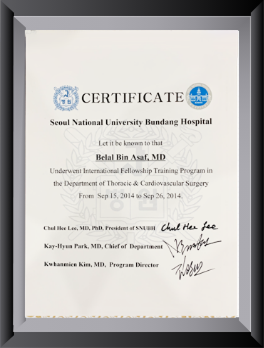
Myasthenia gravis (MG) is a highly treatable autoimmune condition, but outcomes depend heavily on who is coordinating your care. Dr. Belal Bin Asaf is Director of the Institute of Chest Surgery, Chest Onco-Surgery & Lung Transplantation at Medanta Hospital, Noida (Sector 50) — a position built on a Clinical Registrar posting in General Thoracic Surgery at AIIMS, New Delhi and a fellowship in Thoracic Surgery at Seoul National University Bundang Hospital, South Korea. He was also the first surgeon in India to perform a Robotic Subxiphoid Thymectomy, a distinction that reflects the depth of his focus on thymus-related disease.
As Director of the Institute of Chest Surgery, Chest Onco-Surgery & Lung Transplantation, Dr. Belal brings 15+ years of thoracic surgery experience to a practice centred on Robotic Thoracic Surgery, VATS, lung cancer, and the surgical management of myasthenia gravis and thymoma. He focuses on the surgical dimension of MG care — particularly thymus gland removal — working alongside neurology colleagues to manage this fluctuating, autoimmune muscle-weakness disorder from diagnosis through long-term recovery.
MG is caused by the immune system generating antibodies against acetylcholine receptors, the molecular docking points at the neuromuscular junction where nerve impulses are converted into muscle movement. When these receptors are blocked or destroyed, the signal to contract gets weaker with each repetition, producing the disease's signature pattern: strength that is relatively preserved after rest but declines noticeably with sustained or repeated activity.
Patients at Medanta – The Medicity often first present with eye-related symptoms — one or both eyelids drooping (ptosis) or intermittent double vision (diplopia) — sometimes initially mistaken for simple tiredness after long work hours, a common concern among Gurugram's large corporate workforce that brings many of them to a myasthenia gravis specialist Gurgaon can reach easily. As the disease progresses, it can affect the muscles of speech and swallowing, causing slurred speech or difficulty finishing meals, and can weaken the arms, legs, and neck enough to interfere with routine activity. In severe, undertreated cases, the muscles that control breathing weaken, leading to myasthenic crisis, a critical situation demanding urgent hospital-based treatment.
MG is closely tied to abnormalities of the thymus gland, an organ located in the upper chest behind the sternum. Around 10-15% of MG patients are found to have a thymoma, while thymic hyperplasia — an enlarged, overactive thymus — is common in many others and is thought to perpetuate the autoimmune antibody production responsible for the disease. Identifying thymus involvement early shapes the entire treatment strategy, which is why chest imaging is a non-negotiable step in the workup of every MG patient evaluated at Medanta.
Diagnosis begins with a detailed clinical examination assessing fatigable weakness in specific muscle groups, followed by blood tests for acetylcholine receptor antibodies and, if needed, anti-MuSK antibodies. Electrophysiological testing — repetitive nerve stimulation and EMG — helps confirm that the defect lies at the neuromuscular junction, work typically coordinated with the best neurologist for myasthenia gravis in Gurgaon available on the Medanta campus. A CT scan of the chest is performed to characterise the thymus gland and detect any thymoma. The edrophonium (Tensilon) test, an older pharmacological diagnostic tool, is occasionally still cited as part of the diagnostic history for MG.
Initial management typically relies on pyridostigmine, which improves neuromuscular signal transmission, combined with steroids or steroid-sparing immunosuppressants to control the underlying autoimmune process. For patients with thymoma, and many with persistent symptoms despite optimal medication, thymectomy — surgical removal of the thymus gland — offers a meaningful chance of improved muscle strength and, in a substantial number of cases, long-term remission. This is the area of Dr. Belal Bin Asaf's particular expertise: he is the first surgeon in India to have performed a robotic subxiphoid thymectomy, an approach that avoids splitting the breastbone and instead accesses the thymus through small incisions beneath it. At Medanta – The Medicity, patients have access to both VATS and fully robotic thymectomy, translating into less postoperative pain, smaller scars, and considerably faster recovery than conventional open sternotomy.
With over 15 years dedicated to thoracic and chest onco-surgery, Dr. Belal has built one of the most experienced robotic thymus surgery practices in the country, based right at Medanta – The Medicity. For Gurugram patients searching for a myasthenia gravis doctor in Gurgaon, this means world-class, technically demanding thymectomy surgery is available locally, without the need to travel to another city for a procedure that few surgeons in India are trained to perform at this level.
Medanta – The Medicity in Sector 38 is centrally positioned for patients across Gurugram — from DLF Phases and Golf Course Road to Sohna Road and Manesar — as well as for South Delhi residents who find it more accessible via NH-48 than crossing to the other side of the capital. As the region's most comprehensive myasthenia gravis hospital in Gurgaon, its scale as a multi-specialty hospital also means neurology, radiology, and critical care support are all available on the same campus, which is particularly reassuring for a condition like MG that sometimes requires urgent, coordinated care.
If drooping eyelids, double vision, or fluctuating muscle weakness are affecting your daily life in Gurugram, timely diagnosis and the right treatment plan can substantially improve your quality of life. Contact Dr. Belal Bin Asaf's team at Medanta – The Medicity, Sector 38, Gurugram to schedule a consultation and find out whether medical therapy or thymectomy is the right next step for you as part of your myasthenia gravis treatment in Gurgaon.
Prefer to book a consultation online right away? Dr. Belal Bin Asaf also sees patients for this condition in Noida and Delhi. Learn more about his full practice as thoracic surgeon in Gurgaon.


Medically Written & Reviewed By
Director, Institute of Chest Surgery, Chest Onco-Surgery & Lung Transplantation — trained at AIIMS, New Delhi, with a Thoracic Surgery fellowship at Seoul National University Bundang Hospital, South Korea; first surgeon in India to perform a Robotic Subxiphoid Thymectomy. View full credentials & experience →


Morning: 10:00AM - 2:00PM
Evening 4:00PM - 6:00PM(Mon to Sat)


