

Dr. Belal Bin Asaf
Thoracic (Chest) Surgeon
Director, Institute of Chest Surgery,
Chest Onco-Surgery & Lung Transplantation, Medanta Hospital

-
 [email protected]
-
Follow Us:


Dr. Belal Bin Asaf
Thoracic (Chest) Surgeon
Director, Institute of Chest Surgery,
Chest Onco-Surgery & Lung Transplantation, Medanta Hospital
[email protected]


For residents of Gurgaon dealing with unexplained breathlessness or a diagnosis of fluid around the lungs, finding the right pleural effusion treatment in Gurgaon starts with choosing a surgeon who specializes specifically in chest and pleural disease. Dr. Belal Bin Asaf manages the full spectrum of pleural effusion, from routine diagnostic drainage to complex surgical cases requiring VATS, for patients travelling from across Gurgaon and the surrounding NCR.
As Director of the Institute of Chest Surgery, Chest Onco-Surgery & Lung Transplantation at Medanta Hospital, Noida (Sector 50), and with more than 15 years dedicated to thoracic surgery, Dr. Belal Bin Asaf became the first surgeon in India to perform a Robotic Subxiphoid Thymectomy — a distinction that reflects the level of expertise he brings as a pleural effusion doctor in Gurgaon. His practice spans Robotic Thoracic Surgery, VATS, Lung Cancer, and Myasthenia Gravis & Thymoma treatment, making him a pleural effusion specialist Gurgaon patients are increasingly referred to for recurrent or complicated effusions.
Each lung sits inside a two-layered membrane called the pleura — one layer hugging the lung surface, the other lining the chest wall. In a healthy person, a very small amount of fluid sits between these layers purely to reduce friction as the lungs move. A pleural effusion develops when abnormal amounts of fluid collect in this space, pressing on the lung from outside and limiting its ability to fully inflate. Small effusions may cause few symptoms, while large ones can seriously interfere with breathing.
Pleural fluid is broadly split into transudates and exudates, and distinguishing between them guides the entire treatment plan. Transudative fluid results from conditions that disturb the body's overall fluid and pressure balance — most often heart failure, liver cirrhosis, or kidney disease. Exudative fluid, by contrast, results from direct disease or inflammation of the pleura or lung. Infections such as pneumonia are a common trigger (and can progress to empyema, an infected effusion), while tuberculosis remains a very common cause of exudative effusion in India. Other causes include malignant effusion from lung or pleural cancer, pulmonary embolism, and autoimmune disorders such as rheumatoid arthritis or lupus.
Breathlessness is the most frequent complaint, often starting subtly during physical activity and becoming noticeable even at rest as more fluid accumulates. A feeling of chest heaviness or a dull ache on the affected side, especially with breathing or coughing, is also typical, along with a dry cough that does not bring up phlegm. Large effusions can cause marked respiratory distress and require urgent evaluation.
The workup usually begins with a chest X-ray to identify fluid in the chest cavity. An ultrasound scan of the chest follows, both confirming the effusion and guiding a safe needle path for drainage. A CT scan of the chest may be used to evaluate the lung and pleura in greater detail, particularly when a mass or loculated (compartmentalized) fluid collection is suspected. Thoracentesis — withdrawing a fluid sample with a needle — is the key diagnostic step: the fluid's protein and LDH levels are compared to blood values using Light's criteria to classify it as transudate or exudate, cultures are sent to detect infection or TB, and cytology is performed to check for cancer cells.
The first priority is always treating what's causing the effusion, whether that means adjusting heart failure treatment, starting tuberculosis therapy, or prescribing antibiotics for infection. Therapeutic thoracentesis is used to relieve breathlessness by draining fluid directly. When effusions keep coming back, become infected, or form loculated pockets, more advanced intervention is needed. Dr. Belal Bin Asaf offers chest tube drainage for ongoing fluid removal, and Video-Assisted Thoracoscopic Surgery (VATS) for surgically clearing loculated or infected effusions, including decortication to free a lung trapped under a thick fibrous peel. For recurrent malignant pleural effusions, pleurodesis is performed to fuse the pleural layers together and prevent fluid from re-accumulating, reducing the need for repeated drainage procedures.
With more than 15 years of dedicated experience in thoracic surgery and the distinction of being the first surgeon in India to perform a Robotic Subxiphoid Thymectomy, Dr. Belal Bin Asaf brings a rare depth of expertise in complex pleural and chest disease to Gurgaon. At Medanta – The Medicity, patients have access to a comprehensive thoracic surgery unit, robotic and VATS capability, and multidisciplinary support for cancer-related and infection-related effusions, all under one roof. This breadth of expertise and infrastructure is why he is regarded as the best pulmonologist for pleural effusion Gurgaon patients are referred to, and why Medanta – The Medicity has become a trusted pleural effusion hospital in Gurgaon for both diagnosis and advanced surgical management.
Medanta – The Medicity's Sector 38 location makes it a natural choice for patients across Gurgaon's residential and corporate sectors, as well as Manesar and South Delhi, with straightforward access via NH-48 and the Southern Peripheral Road. Because pleural effusion care often involves a diagnostic visit, a drainage procedure, and follow-up imaging, having this level of specialist care nearby significantly reduces the inconvenience of long-distance travel for ongoing monitoring.
If you are in Gurgaon and experiencing breathlessness, chest heaviness, or have been diagnosed with pleural effusion, schedule a consultation with Dr. Belal Bin Asaf at Medanta – The Medicity, Gurugram, for an accurate diagnosis and a treatment plan tailored to your condition.
Prefer to book a consultation online right away? Dr. Belal Bin Asaf also sees patients for this condition in Noida and Delhi. Learn more about his full practice as thoracic surgeon in Gurgaon.

Medically Written & Reviewed By
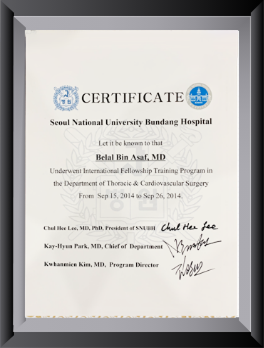
Director, Institute of Chest Surgery, Chest Onco-Surgery & Lung Transplantation — trained at AIIMS, New Delhi, with a Thoracic Surgery fellowship at Seoul National University Bundang Hospital, South Korea; first surgeon in India to perform a Robotic Subxiphoid Thymectomy. View full credentials & experience →


Morning: 10:00AM - 2:00PM
Evening 4:00PM - 6:00PM(Mon to Sat)


