

Dr. Belal Bin Asaf
Thoracic (Chest) Surgeon
Director, Institute of Chest Surgery,
Chest Onco-Surgery & Lung Transplantation, Medanta Hospital

-
 [email protected]
-
Follow Us:


Dr. Belal Bin Asaf
Thoracic (Chest) Surgeon
Director, Institute of Chest Surgery,
Chest Onco-Surgery & Lung Transplantation, Medanta Hospital
[email protected]


If you or a family member in Noida has been told there is "fluid around the lung," you are dealing with a condition called pleural effusion, and finding the right pleural effusion treatment in Noida early can make a real difference to comfort and recovery. Cases range from straightforward ones needing a single drainage procedure to complex, recurrent effusions that require surgical intervention, which is why timely, specialist-led evaluation matters.
Dr. Belal Bin Asaf is a pleural effusion doctor in Noida with over 15 years of dedicated thoracic surgery experience. He trained as a Clinical Registrar in General Thoracic Surgery at AIIMS, New Delhi, before going on to become the first surgeon in India to perform a Robotic Subxiphoid Thymectomy. Today, as Director of the Institute of Chest Surgery, Chest Onco-Surgery & Lung Transplantation at Medanta Hospital, Noida (Sector 50), he is widely regarded as a trusted pleural effusion specialist Noida patients turn to, with particular expertise across Robotic Thoracic Surgery, VATS, Lung Cancer, and Myasthenia Gravis & Thymoma treatment.
The pleura is a thin double-layered membrane that wraps around each lung and lines the inside of the chest wall. Normally there is only a small, almost negligible amount of lubricating fluid between these two layers, allowing the lungs to slide smoothly as you breathe. A pleural effusion occurs when this space fills with an abnormal, excess volume of fluid, compressing the lung and restricting how much it can expand. Depending on the volume and speed of accumulation, this can range from a mild finding on a scan to a medical emergency causing severe breathlessness.
Doctors classify pleural fluid into two broad categories, and identifying which one you have is central to treatment. Transudative effusions result from pressure or fluid-balance problems elsewhere in the body — congestive heart failure, liver cirrhosis, and chronic kidney disease are the usual culprits, causing fluid to leak passively into the pleural space. Exudative effusions, on the other hand, arise from local inflammation, infection, or disease of the pleura and lung itself. In our part of the country, tuberculosis remains one of the most frequent causes of exudative effusion, alongside bacterial pneumonia (which can progress to an infected, pus-filled effusion called empyema), lung or pleural cancer (malignant effusion), pulmonary embolism, and autoimmune conditions such as lupus or rheumatoid arthritis.
The most common complaint is progressive breathlessness, which may initially appear only on exertion and later occur even at rest as fluid accumulates. Many patients describe a dull ache or heaviness on one side of the chest that worsens with deep breathing or coughing. A dry, non-productive cough is also common. When the effusion is large, patients can develop significant respiratory distress, rapid breathing, and low oxygen levels that need urgent medical attention.
Diagnosis usually starts with a chest X-ray, which can reveal even moderate amounts of fluid. This is followed by an ultrasound of the chest, which not only confirms the fluid but also helps mark a safe site for drainage. A CT scan of the chest gives a more detailed picture of the lung, pleura, and any underlying mass or loculated (walled-off) pockets of fluid. The most important diagnostic step is often thoracentesis — a needle aspiration procedure in which a sample of the fluid is withdrawn and sent for laboratory analysis. Testing the fluid's protein and LDH levels against blood levels (Light's criteria) tells us whether the fluid is transudative or exudative; culture identifies infection or TB, and cytology looks for malignant cells.
Treatment always begins with addressing the root cause — for instance, optimizing heart failure medication, starting anti-tubercular therapy, or treating pneumonia with antibiotics. For symptomatic relief, therapeutic thoracentesis is used to drain fluid and ease breathing quickly. When effusions are recurrent, infected, or loculated, simple needle drainage is not enough. In these cases, Dr. Belal Bin Asaf uses chest tube drainage, and where fluid pockets are complex or an empyema has formed, Video-Assisted Thoracoscopic Surgery (VATS) to surgically clear infected material and decorticate the trapped lung. For patients with recurrent malignant pleural effusions — common in lung cancer — pleurodesis is performed to seal the pleural space and prevent the fluid from returning, sparing patients repeated hospital visits for drainage.
Dr. Belal Bin Asaf is one of India's most experienced thoracic surgeons, with over 15 years dedicated exclusively to chest and lung surgery, and the distinction of being the first surgeon in India to perform a Robotic Subxiphoid Thymectomy. At Medanta Hospital, Sector 50, Noida, he combines this surgical expertise with the hospital's dedicated thoracic surgery infrastructure, critical care support, and interventional pulmonology backup — meaning a patient can move from diagnostic thoracentesis to VATS decortication or pleurodesis, if needed, without being transferred between facilities. This is why he is frequently sought out as the best pulmonologist for pleural effusion Noida families ask about, and why Medanta Hospital is regarded as a leading pleural effusion hospital in Noida for both diagnosis and surgical management.
Medanta Hospital's Sector 50 location places it within easy reach for patients across Noida's residential sectors, Greater Noida, and Ghaziabad, with direct connectivity via the Noida-Greater Noida Expressway and DND Flyway. This local access matters for pleural effusion patients in particular, since the condition often requires more than one visit — an initial diagnostic workup, drainage, and follow-up imaging to confirm the lung has re-expanded — and having a specialist center close to home reduces the burden of repeated travel.
If you are experiencing breathlessness, chest heaviness, or have been found to have fluid around the lung on a scan, do not delay evaluation. Contact Dr. Belal Bin Asaf's team at Medanta Hospital, Noida, to schedule a consultation and get a clear, personalized diagnosis and treatment plan.
Prefer to book a consultation online right away? Dr. Belal Bin Asaf also sees patients for this condition in Delhi and Gurgaon. Learn more about his full practice as thoracic surgeon in Noida.


Medically Written & Reviewed By
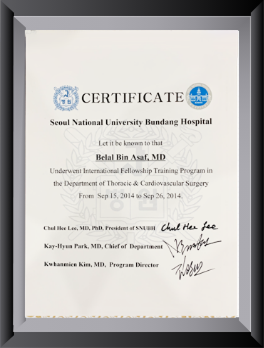
Director, Institute of Chest Surgery, Chest Onco-Surgery & Lung Transplantation — trained at AIIMS, New Delhi, with a Thoracic Surgery fellowship at Seoul National University Bundang Hospital, South Korea; first surgeon in India to perform a Robotic Subxiphoid Thymectomy. View full credentials & experience →


Morning: 10:00AM - 2:00PM
Evening 4:00PM - 6:00PM(Mon to Sat)


