

Dr. Belal Bin Asaf
Thoracic (Chest) Surgeon
Director, Institute of Chest Surgery,
Chest Onco-Surgery & Lung Transplantation, Medanta Hospital

-
 [email protected]
-
Follow Us:


Dr. Belal Bin Asaf
Thoracic (Chest) Surgeon
Director, Institute of Chest Surgery,
Chest Onco-Surgery & Lung Transplantation, Medanta Hospital
[email protected]


Dr. Belal Bin Asaf offers advanced thymectomy treatment in Gurgaon for patients diagnosed with thymus gland conditions, including thymoma and selected cases of myasthenia gravis. With over 20 years of experience in thoracic, thoracoscopic, and robotic surgery, he specializes in advanced minimally invasive and robotic thymectomy procedures.
His patient-focused approach combines comprehensive evaluation, advanced imaging, multidisciplinary expertise, and carefully planned surgical treatment. Each procedure is tailored to the patient's specific condition to support precision, safety, and effective recovery.
For patients seeking thymectomy treatment in Gurgaon, Dr. Belal Bin Asaf provides specialized surgical care supported by modern technology and extensive experience in complex chest procedures.
A thymectomy can be described as an operation to remove the thymus gland. The thymus lies behind the breastbone, or the sternum, which is located in the upper region of the chest. It plays a crucial role in the growth and function of the immune system, particularly in a child's early years.
In adulthood, the thymus is less active than it was in early childhood. However, abnormalities of the thymus could be connected to certain health conditions like thymoma or myasthenia gravis.
Based on the patient's symptoms, age, and overall health, removal of the thymus may be suggested as part of a complete treatment program.
Thymectomy may be recommended for patients with various thymus-related disorders, depending on their specific condition, symptoms, and overall health.
Myasthenia gravis is an autoimmune condition that causes weakness and fatigue in voluntary muscles. Certain patients suffering from generalized myasthenia gravis might benefit from thymectomy. Nearly two-thirds of the patients with myasthenia gravis will have benefits after thymectomy.
Thymectomy is usually performed in conjunction with a neurologist. It may be suggested even if there is no evidence of a thymic tumor in a specific patient.
A thymoma is a tumor that originates in the thymus gland. Surgery is usually an essential and mandatory part of treatment, especially if the tumor is localized and is removable surgically, as complete removal offers the best long term outcomes.
Other tumors of the thymus could require surgical evaluation and treatment based on their nature, size, and behavior.
Thymomas are usually asymptomatic, i.e., they cause no symptoms in their initial stages and are often discovered incidentally or during evaluation for myasthenia gravis. As the tumor enlarges in size, it can cause compression of adjacent structures or, in aggressive cases, may even invade adjacent structures like the lung, pericardium, phrenic nerve, and major blood vessels coming from and going into the heart, and this can lead to symptoms like:
Patients suffering from myasthenia gravis might suffer from the following:
A diagnosis of a thymus-related condition requires careful evaluation by a qualified thoracic surgeon to determine whether thymectomy is an appropriate treatment option. A specialist can assess your condition, review the necessary investigations, and recommend the most suitable approach based on your individual needs.
A thorough evaluation is required prior to deciding on a surgical procedure. Dr. Belal Bin Asaf may suggest several tests depending on the patient's condition.
A thymectomy operation in Gurgaon involves the removal of the thymus gland using an appropriate surgical procedure. The procedure chosen depends on the patient's diagnosis, tumor size, anatomy, and overall health. The main surgical options are the following:
When clinically appropriate, minimally invasive procedures, particularly robotic-assisted thymectomy, can offer effective thymus elimination with less trauma to the surgical area.
Minimally invasive thymectomy involves removal of the thymus gland without the need to cut open the front of the chest by a breastbone-cutting (sternotomy) approach. Minimally invasive options include robotic-assisted thymectomy or video-assisted thoracoscopic surgery. In VATS (Video-Assisted Thoracic Surgery), small incisions are made, and with the help of a telescopic camera and specially designed slender long instruments, access is gained to the thymus within the chest. The potential benefits are:
Dr. Belal Bin Asaf has years of experience with minimally invasive chest surgery. He meticulously evaluates every patient before recommending VATS thymectomy.
Robotic-assisted thymectomy is a cutting-edge method of thymus gland operation in Gurgaon and is currently the best and most advanced minimally invasive option for removal of the thymus gland. The robotic system offers enhanced 3D visualization and precise instrument control, similar to human hand movements, which can be especially beneficial when working around delicate chest structures. It allows for complete removal of all target tissue, which includes the thymus gland along with any thymoma and all of the pericardial fat from the root of the neck to the start of the abdomen. The benefits over conventional open and VATS techniques include:
As the pioneer of robotic thoracic surgery in India, Dr. Belal Bin Asaf offers robotic procedures when appropriate for the patient's medical condition. He has pioneered robotic thoracic surgery procedures and has a keen interest and special expertise in robotic surgery for the removal of the thymus gland (robotic thymectomy) for patients with myasthenia gravis and thymoma.
Are you being recommended to undergo a thymectomy? Make an appointment with Dr. Belal Bin Asaf to discuss your surgical options and prepare for treatment.
In the case of patients who are diagnosed with myasthenia gravis, thymectomy may be an essential part of the treatment of chronic disease.
The procedure could help reduce inflammation and, in certain patients, lessen symptoms and the need for specific medications over time. The benefits and timeframe for surgery differ from patient to patient. In general, nearly two-thirds of patients with myasthenia gravis will benefit from surgery, with some gaining complete resolution of myasthenic symptoms without any medication – a situation called complete stable remission.
Thymectomy is not an immediate cure for myasthenia gravis. Improvement may occur gradually over several months or even years, and patients may require regular neurological follow-ups after surgery.
Successful treatment also involves close coordination among the thoracic surgeon, neurologist, anesthesiologist, and other healthcare professionals. This multidisciplinary approach helps ensure appropriate monitoring, postoperative care, and ongoing management throughout the recovery process.
A thymoma diagnosis often makes surgery an important part of the treatment plan. The primary goal of surgery is to remove the tumor completely while protecting the surrounding organs and structures.
Depending on the tumor's stage, size, and other clinical factors, additional treatments such as chemotherapy or radiation therapy may also be recommended. Patients with suspected or confirmed thymoma require a thorough evaluation to determine the most appropriate surgical approach.
Based on the individual case, a minimally invasive procedure or open surgery may be considered to achieve effective tumor removal while prioritizing safety and optimal treatment outcomes.
These are the reasons Dr. Belal Bin Asaf is a recommended choice for patients looking for the best thymectomy surgeon in Gurgaon.
Do you need a specialist in thymus surgery? Call us today to book a consultation and discuss the best treatment method for your condition.
The outcome of the surgery depends on the technique used and the patient's overall health. Patients who undergo minimally invasive thymectomy could have the following:
Patients suffering from myasthenia gravis might require additional surveillance following surgery due to the weakness of respiratory muscles, which can hinder postoperative recovery.
Following medication guidelines and attending scheduled follow-up appointments are essential to support a healthy recovery.
When selecting the thymectomy surgery center in Gurgaon, patients should take into account the expertise of the surgeon who performs the thoracic surgery and the availability of minimally invasive and robotic surgical options, intensive care assistance, advanced imaging techniques, as well as anesthesia-related expertise.
A specialized thoracic surgery center will provide a coordinated assessment and treatment for thymic tumors as well as myasthenia gravis.
Dr. Belal Bin Asaf's thorough method is based on precise diagnosis and the right surgical choice, along with the most advanced technologies and individualized post-operative treatment.
Make an appointment now for an in-depth analysis and expert advice on thymectomy.
Thymus-related conditions require specialized evaluation because the thymus is located close to several vital structures within the chest. Dr. Belal Bin Asaf combines extensive expertise in thoracic surgery with advanced VATS and robotic surgical techniques to provide specialized and minimally invasive thymectomy treatment in Gurgaon. His approach focuses on careful assessment, surgical precision, and personalized treatment planning to support safe and effective outcomes.
When thymectomy may be contemplated for myasthenia gravis, thymoma, or any other thymic disorder, treatment should be based on a thorough diagnostic and imaging analysis.
Schedule an appointment or call today to consult with Dr. Belal Bin Asaf and discuss whether minimally invasive or robotic thymectomy is an appropriate treatment option for your condition.
We are here for you! How can we help?

Director
Institute Of Chest Surgery, Chest
Onco-Surgery & Lung Transplantation
Dr. Belal Bin Asaf is a renowned Thoracic (Chest) Surgeon and Director of the Institute of Chest Surgery, Chest Onco-Surgery & Lung Transplantation at Medanta Superspecialty Hospital, Noida and Medanta – The Medicity, Gurugram. He specializes in Robotic Thoracic Surgery, VATS, Lung Cancer, Myasthenia Gravis & Thymoma treatment, and was the first surgeon in India to perform Robotic Subxiphoid Thymectomy.

Medically Written & Reviewed By
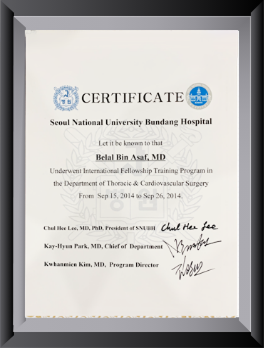
Director, Institute of Chest Surgery, Chest Onco-Surgery & Lung Transplantation — trained at AIIMS, New Delhi, with a Thoracic Surgery fellowship at Seoul National University Bundang Hospital, South Korea; first surgeon in India to perform a Robotic Subxiphoid Thymectomy. View full credentials & experience →


Morning: 10:00AM - 2:00PM
Evening 4:00PM - 6:00PM(Mon to Sat)


