
Dr. Belal Bin Asaf
Thoracic (Chest) Surgeon
Director, Institute of Chest Surgery,
Chest Onco-Surgery & Lung Transplantation, Medanta Hospital
-
 [email protected]
-
Follow Us:


Dr. Belal Bin Asaf
Thoracic (Chest) Surgeon
Director, Institute of Chest Surgery,
Chest Onco-Surgery & Lung Transplantation, Medanta Hospital
[email protected]


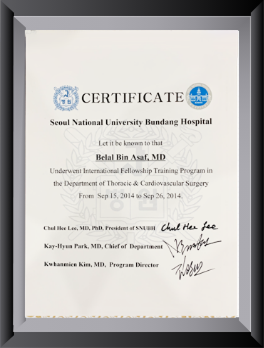
Dr. Belal Bin Asaf holds the position of Director of the Institute of Chest Surgery, Chest Onco-Surgery & Lung Transplantation at Medanta Superspecialty Hospital, Noida (Sector 50), a role built on more than 15 years of dedicated thoracic surgery experience spanning Robotic Thoracic Surgery, VATS, Lung Cancer, and the treatment of Myasthenia Gravis and thymoma. His training took him from AIIMS, New Delhi, where he worked as a Clinical Registrar in General Thoracic Surgery, to a fellowship in Thoracic Surgery at Seoul National University Bundang Hospital in South Korea — a path that eventually led him to become the first surgeon in India to perform a Robotic Subxiphoid Thymectomy.
For patients researching thymoma treatment in Gurgaon, that combination of credentials and hands-on surgical volume is exactly what's worth checking for before choosing a surgeon. If you're weighing your options for a thymoma doctor in Gurgaon, whether because of a recently discovered mass or an ongoing diagnosis, this page covers the medical basics, how the disease is worked up, and what treatment actually involves.
Tucked behind the breastbone in the upper chest, in an area known as the anterior mediastinum, sits the thymus — a gland that's important in early life for immune development and typically becomes inactive with age. A thymoma is a tumour arising from this gland, and it's diagnosed most often in adults in their 40s, 50s, and 60s, with childhood cases being rare. Thymomas are usually slow-growing and benign in behaviour, though the more aggressive form, thymic carcinoma, does occur and calls for a different pace and intensity of treatment.
An estimated 30-40% of thymoma patients also have Myasthenia Gravis, a neuromuscular autoimmune disease, or a related autoimmune disorder such as pure red cell aplasia or hypogammaglobulinemia. This association is well-established enough that it changes how the disease is investigated from day one — a thymoma work-up isn't complete without also checking for signs of MG, since managing both conditions together tends to produce better outcomes than treating the tumour in isolation.
A significant share of thymomas are discovered incidentally, spotted on a CT scan or chest X-ray ordered for an unrelated reason. Where symptoms are present, patients commonly describe chest pain or a feeling of pressure, a persistent cough, or breathlessness, all related to the tumour's position near the breastbone and lungs. Patients with coexisting Myasthenia Gravis may also report drooping of the eyelids, muscle weakness that becomes more noticeable with repeated effort, or double vision — symptoms that are worth mentioning to your doctor even if they seem unrelated to the chest finding.
A contrast-enhanced CT scan of the chest is the first and most important imaging test, and an MRI may be added when more detail is needed about the tumour's extent. Staging is done using the Masaoka-Koga system, which classifies the tumour based on whether it remains within its capsule or has spread into surrounding tissue — this staging directly informs whether surgery alone will be curative or whether additional treatment is needed. In select cases, a biopsy confirms the diagnosis before treatment begins, and acetylcholine receptor antibody testing is used to screen for associated Myasthenia Gravis.
Surgical removal of the tumour, known as thymectomy, is the standard of care for thymomas that are resectable. At Medanta – The Medicity, Dr. Belal Bin Asaf performs this using robotic and VATS (video-assisted thoracoscopic surgery) techniques, including the robotic subxiphoid thymectomy — an approach that avoids splitting the breastbone entirely and one he was the first surgeon in India to perform. Compared to traditional open sternotomy, these techniques are associated with smaller incisions, reduced post-operative pain, and a faster recovery timeline. For thymomas that are larger, locally invasive, or classified as thymic carcinoma, surgery is combined with radiotherapy or chemotherapy as needed, with treatment decisions for complex cases made through a multidisciplinary tumour board.
Dr. Belal Bin Asaf serves as Director of the Institute of Chest Surgery, Chest Onco-Surgery & Lung Transplantation and brings more than 15 years of dedicated experience in thoracic and mediastinal surgery. At Medicity, thymoma care draws on the hospital's wider strengths in neurology for MG management, radiation oncology, and critical care, giving patients access to a complete treatment ecosystem rather than a single specialist working in isolation. As a thymoma specialist in Gurgaon, he is often named by patients and referring physicians alike as the best oncologist for thymoma in Gurgaon, largely because of how rarely this level of focused mediastinal surgical experience is available locally.
Medanta – The Medicity's location on Sector 38 in Gurugram, just off the Golf Course Road extension, makes it a convenient option — and a well-known thymoma hospital in Gurgaon — for patients travelling from across Gurgaon, Manesar, and neighbouring South Delhi localities such as Vasant Kunj and Chhatarpur, keeping travel time short for both surgery and follow-up visits.
If you have a thymoma diagnosis or a suspicious finding on a chest scan, schedule a consultation with Dr. Belal Bin Asaf at Medanta – The Medicity, Sector 38, Gurugram, to review your case and discuss the most appropriate treatment path.
Prefer to book a consultation online right away? Dr. Belal Bin Asaf also sees patients for this condition in Noida and Delhi. Learn more about his full practice as thoracic surgeon in Gurgaon.


Medically Written & Reviewed By
Director, Institute of Chest Surgery, Chest Onco-Surgery & Lung Transplantation — trained at AIIMS, New Delhi, with a Thoracic Surgery fellowship at Seoul National University Bundang Hospital, South Korea; first surgeon in India to perform a Robotic Subxiphoid Thymectomy. View full credentials & experience →


Morning: 10:00AM - 2:00PM
Evening 4:00PM - 6:00PM(Mon to Sat)


