
Dr. Belal Bin Asaf
Thoracic (Chest) Surgeon
Director, Institute of Chest Surgery,
Chest Onco-Surgery & Lung Transplantation, Medanta Hospital
-
 [email protected]
-
Follow Us:


Dr. Belal Bin Asaf
Thoracic (Chest) Surgeon
Director, Institute of Chest Surgery,
Chest Onco-Surgery & Lung Transplantation, Medanta Hospital
[email protected]


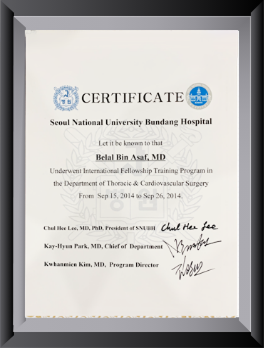
For residents of Delhi searching for thymoma treatment in Delhi, it's important to start with an honest note: Dr. Belal Bin Asaf does not run a physical clinic within Delhi itself. He is based at Medanta Hospital, Sector 50, Noida — where he serves as Director of the Institute of Chest Surgery, Chest Onco-Surgery & Lung Transplantation — a location that sits just across the Delhi border, reachable in a short drive via the DND Flyway or the Noida-Delhi Chilla/Kalindi Kunj routes from most East and South Delhi neighbourhoods. After completing a fellowship in Thoracic Surgery at Seoul National University Bundang Hospital in South Korea, he went on to become the first surgeon in India to perform a Robotic Subxiphoid Thymectomy, and many of his thymoma patients living in Delhi travel this short distance for a level of thoracic surgical expertise — built over more than 15 years — that is genuinely difficult to find nearby, including one of the country's most experienced robotic thymectomy programmes.
Whether you're looking for a thymoma doctor in Delhi or want a specialist second opinion on an existing diagnosis, this page covers what thymoma is, how it relates to Myasthenia Gravis, and what treatment actually involves.
The thymus gland sits high in the chest, tucked behind the breastbone in the region called the anterior mediastinum. It's active during childhood and largely dormant in adults, but it remains a possible source of tumours later in life — these are called thymomas. They occur most frequently in the 40-to-60-year age group and are uncommon in children. The majority behave in a benign, slow-growing fashion, though a small subset, known as thymic carcinoma, is more aggressive and requires prompt, decisive treatment.
A distinctive feature of thymoma is its relationship with Myasthenia Gravis, an autoimmune disease that disrupts communication between nerves and muscles. Roughly a third to two-fifths of thymoma patients are found to have MG or a related autoimmune condition — pure red cell aplasia and hypogammaglobulinemia are two others that occasionally appear. This is one reason a thoracic surgeon with specific mediastinal tumour experience matters: the surgical and medical management often need to be coordinated together, not treated as two separate problems.
Many patients never notice a symptom at all — the tumour is picked up by chance on a CT or chest X-ray done for another reason. When symptoms do occur, they usually relate to the tumour's location behind the breastbone: chest discomfort or pressure, a cough that lingers, or shortness of breath. Separately, if Myasthenia Gravis is present, a patient may notice eyelid drooping, muscles that tire and weaken with repeated use, or episodes of double vision — symptoms that are easy to dismiss as fatigue until they're evaluated together with the chest findings.
Work-up begins with a contrast CT scan of the chest, which gives a detailed picture of the tumour's size, location, and relationship to nearby blood vessels and lung tissue; MRI is used in certain cases for additional clarity. The tumour is staged using the Masaoka-Koga system, which distinguishes an encapsulated tumour from one that has begun invading surrounding structures — a key factor in deciding whether surgery alone is sufficient. A biopsy is reserved for cases where imaging alone doesn't settle the diagnosis, and blood testing for acetylcholine receptor antibodies is done to check for associated Myasthenia Gravis.
Surgical removal — thymectomy — is the primary treatment when a thymoma can be resected, and how it's performed matters a great deal to recovery. Rather than opening the chest through the breastbone, Dr. Belal Bin Asaf specialises in robotic and VATS (video-assisted thoracoscopic surgery) thymectomy, including the robotic subxiphoid approach, entering from below the sternum rather than splitting it — a technique he was the first in India to perform. Patients typically experience less pain, smaller scars, and a quicker recovery than with traditional open sternotomy. When a tumour is larger or has invaded nearby structures, or in thymic carcinoma, treatment is combined with radiotherapy or chemotherapy, guided by discussion in a multidisciplinary tumour board.
Dr. Belal Bin Asaf brings more than 15 years of focused experience in chest and mediastinal surgery, and his robotic thymectomy programme is among the most established in the NCR. For a relatively uncommon tumour like thymoma, that concentration of experience — rather than proximity alone — is usually what patients from Delhi are prioritising when they choose where to be treated. For anyone comparing options, he is frequently the thymoma specialist in Delhi patients turn to, and often the reason patients searching for the best oncologist for thymoma in Delhi end up at Medanta Noida instead of staying within city limits.
From areas like East Delhi, Noida Border, Mayur Vihar, and even South and Central Delhi, Medanta Hospital in Sector 50, Noida is typically a 30-to-45-minute drive depending on traffic and starting point, well within range for pre-surgical consultations, the procedure itself, and follow-up visits. For residents who haven't found a comparable thymoma hospital in Delhi itself, this short drive to Medanta Noida is usually the more practical option.
If you're in Delhi and have a thymoma finding on a scan, or want a specialist opinion on treatment options, a consultation with Dr. Belal Bin Asaf at Medanta Hospital, Noida is a short trip away — reach out to schedule a visit and bring your imaging reports along.
Prefer to book a consultation online right away? Dr. Belal Bin Asaf also sees patients for this condition in Noida and Gurgaon. Learn more about his full practice as thoracic surgeon in Delhi.


Medically Written & Reviewed By
Director, Institute of Chest Surgery, Chest Onco-Surgery & Lung Transplantation — trained at AIIMS, New Delhi, with a Thoracic Surgery fellowship at Seoul National University Bundang Hospital, South Korea; first surgeon in India to perform a Robotic Subxiphoid Thymectomy. View full credentials & experience →


Morning: 10:00AM - 2:00PM
Evening 4:00PM - 6:00PM(Mon to Sat)


