

Dr. Belal Bin Asaf
Thoracic (Chest) Surgeon
Director, Institute of Chest Surgery,
Chest Onco-Surgery & Lung Transplantation, Medanta Hospital

-
 [email protected]
-
Follow Us:


Dr. Belal Bin Asaf
Thoracic (Chest) Surgeon
Director, Institute of Chest Surgery,
Chest Onco-Surgery & Lung Transplantation, Medanta Hospital
[email protected]


Patients searching for tracheal stenosis treatment in Delhi are often surprised to learn that some of the most experienced airway surgeons in the region practise just across the border, in Noida. Dr. Belal Bin Asaf, Director of the Institute of Chest Surgery, Chest Onco-Surgery & Lung Transplantation at Medanta Hospital, Noida (Sector 50), trained as a Clinical Registrar in General Thoracic Surgery at AIIMS, New Delhi, before going on to build a practice focused on Robotic Thoracic Surgery, VATS, Lung Cancer, and Myasthenia Gravis & Thymoma treatment.
With more than 15 years of experience as a tracheal stenosis specialist in Delhi and the wider NCR, Dr. Asaf sees and treats Delhi residents regularly at Medanta Hospital, Sector 50, Noida — a short drive from most parts of the capital — offering the full spectrum of care for this narrowing of the windpipe, from bronchoscopic dilation to major airway reconstruction surgery.
Tracheal stenosis is a narrowing of the trachea (windpipe), the airway that carries breath from the throat down into the lungs. Because the trachea is a rigid tube supported by cartilage rings, it cannot expand to compensate the way softer tissues might — so even a modest narrowing translates directly into reduced airflow and increased effort with every breath. Left unaddressed, tighter segments of stenosis can progress to significant respiratory distress.
Most cases seen in specialist practice trace back to prolonged intubation or tracheostomy — patients who required ventilator support in an ICU, where pressure from the tube's cuff injures the tracheal lining, and the resulting scar tissue narrows the airway as it heals. This is the leading cause encountered clinically. Beyond that, tracheal stenosis can result from direct injury to the neck or chest, tumours — benign or malignant — growing inside the airway or compressing it externally, autoimmune and chronic inflammatory diseases affecting the trachea, and idiopathic subglottic stenosis, an unexplained narrowing just below the voice box seen predominantly in women.
Because tracheal stenosis narrows the airway slowly, many patients adjust their activity levels without realising a medical problem is developing. Key symptoms include:
If breathing becomes difficult even while sitting still, or you notice bluish lips or fingertips, treat this as a medical emergency and seek immediate care rather than waiting for a routine appointment — severe tracheal narrowing can obstruct the airway suddenly.
Diagnosis typically begins with a CT scan of the neck and chest, using 3D airway reconstruction to precisely map where the narrowing is and how severe it is. Bronchoscopy follows, allowing direct visual inspection of the airway and exact measurement of the stenosis's length and tightness. Pulmonary function testing, particularly the flow-volume loop, adds objective evidence of fixed upper-airway obstruction and helps track severity over time.
There's no single treatment for tracheal stenosis — the right approach depends on the length and severity of the narrowing and what originally caused it. For shorter or milder segments, endoscopic dilation (mechanically widening the narrowed area through a bronchoscope) with or without a temporary stent can restore adequate airflow, and is often the first step. When the stenosis is more extensive or keeps recurring after dilation, the definitive answer is surgical tracheal resection and reconstruction — removing the diseased segment of the windpipe and reconnecting the healthy ends. Dr. Asaf coordinates this decision with ENT and pulmonology specialists so that Delhi patients receive a plan matched precisely to their airway anatomy, not a one-size-fits-all protocol.
With 15+ years focused on thoracic and airway surgery, and recognition as the first surgeon in India to perform a robotic subxiphoid thymectomy, Dr. Asaf is regularly sought out by patients from Delhi who want a surgeon experienced specifically in complex tracheal reconstruction — a procedure that few centres perform routinely. Care is delivered at Medanta's fully equipped thoracic surgery unit, backed by advanced bronchoscopy suites and critical care support. For patients weighing the best ENT or pulmonologist for tracheal stenosis in Delhi, this specific sub-specialisation in airway reconstruction is a key differentiator.
There is no physical Dr. Belal Bin Asaf clinic — or dedicated tracheal stenosis hospital in Delhi — offering this level of specialised airway reconstruction; consultations and procedures take place at Medanta Hospital, Sector 50, Noida. For most Delhi residents, especially those in East and South Delhi, this is a manageable and often quick trip via the DND Flyway or the Noida-Delhi border crossings, making it a realistic option for both initial consultation and any follow-up visits your treatment plan requires.
Persistent breathlessness or a noisy, laboured breath is not something to monitor indefinitely on your own. Reach out to book a consultation with Dr. Belal Bin Asaf at Medanta Hospital, Noida, and take the first step toward a clear diagnosis and the right treatment for your airway.
Prefer to book a consultation online right away? Dr. Belal Bin Asaf also sees patients for this condition in Noida and Gurgaon. Learn more about his full practice as thoracic surgeon in Delhi.

Medically Written & Reviewed By
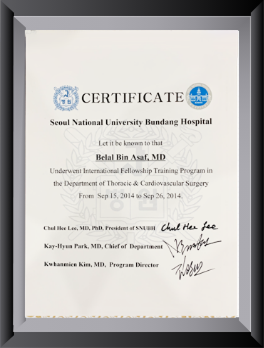
Director, Institute of Chest Surgery, Chest Onco-Surgery & Lung Transplantation — trained at AIIMS, New Delhi, with a Thoracic Surgery fellowship at Seoul National University Bundang Hospital, South Korea; first surgeon in India to perform a Robotic Subxiphoid Thymectomy. View full credentials & experience →


Morning: 10:00AM - 2:00PM
Evening 4:00PM - 6:00PM(Mon to Sat)


