

Dr. Belal Bin Asaf
Thoracic (Chest) Surgeon
Director, Institute of Chest Surgery,
Chest Onco-Surgery & Lung Transplantation, Medanta Hospital

-
 [email protected]
-
Follow Us:


Dr. Belal Bin Asaf
Thoracic (Chest) Surgeon
Director, Institute of Chest Surgery,
Chest Onco-Surgery & Lung Transplantation, Medanta Hospital
[email protected]


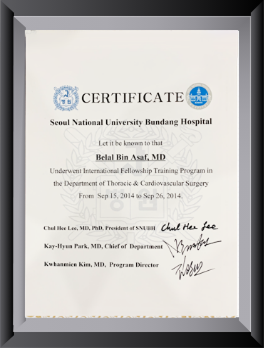
Gurgaon residents dealing with worsening breathlessness, a raspy or noisy breath, or a cough that won't go away have direct access to specialist airway care close to home. Dr. Belal Bin Asaf — Director of the Institute of Chest Surgery, Chest Onco-Surgery & Lung Transplantation at Medanta Hospital, Noida (Sector 50) — completed a fellowship in Thoracic Surgery at Seoul National University Bundang Hospital, South Korea, before establishing himself as one of the region's most experienced tracheal stenosis specialists.
With over 15 years of experience spanning Robotic Thoracic Surgery, VATS, Lung Cancer, and Myasthenia Gravis & Thymoma treatment, he provides tracheal stenosis treatment in Gurgaon at Medanta – The Medicity, Sector 38, Gurugram, one of the region's leading centres for complex thoracic and airway surgery.
The trachea is the windpipe connecting your throat to your lungs, and it needs to stay open at a consistent diameter for normal breathing. Tracheal stenosis is the medical term for an abnormal narrowing along this tube. Unlike softer airway structures, the trachea is reinforced with cartilage and can't stretch to work around a blockage — so narrowing here has an outsized effect on airflow, often producing symptoms well before other lung problems would.
By far the most frequent cause is injury sustained during a hospital stay involving a breathing tube or tracheostomy — the balloon-like cuff used to hold these tubes in place can put sustained pressure on the tracheal wall, and as that injury heals, scar tissue forms and narrows the passage. This is especially relevant for patients recovering from prolonged ICU admissions or major surgery elsewhere. Other recognised causes include blunt or penetrating trauma to the neck, tumours — both benign growths and cancers — that invade or compress the airway, autoimmune and inflammatory diseases that target the tracheal lining, and idiopathic subglottic stenosis, a narrowing below the vocal cords with no clearly identifiable trigger.
Tracheal stenosis rarely announces itself suddenly — it typically creeps in over weeks or months. Common signs include:
Seek emergency care immediately if breathing becomes difficult even at rest, or if you or someone with you develops bluish lips or fingertips — this points to a critically narrowed airway and cannot wait for a routine outpatient visit.
A precise diagnosis relies on three complementary tools. First, a CT scan of the neck and chest with 3D airway reconstruction gives a detailed roadmap of exactly where and how severely the trachea is narrowed. Second, bronchoscopy allows direct visualisation of the airway under camera guidance, confirming the length and tightness of the stricture. Third, pulmonary function tests — particularly the flow-volume loop — provide an objective, reproducible measure of how much the narrowing is limiting airflow, useful both at diagnosis and for tracking response to treatment.
Treatment decisions hinge on how tight and how long the narrowed segment is, along with its underlying cause. Endoscopic dilation, sometimes paired with a temporary airway stent, is often effective for shorter or less severe strictures and can be performed with a bronchoscope without open surgery. When narrowing is extensive, recurrent, or doesn't respond adequately to dilation, tracheal resection and reconstruction becomes the definitive treatment — a specialised surgical procedure in which the affected segment of the windpipe is excised and the two healthy ends are rejoined. Given the complexity of this surgery, Dr. Asaf works closely with ENT and pulmonology teams to plan the safest surgical approach for each patient.
Dr. Asaf has over 15 years of dedicated experience in thoracic and airway surgery and holds the distinction of being the first surgeon in India to perform a robotic subxiphoid thymectomy — reflecting the level of surgical precision he brings to intricate procedures like tracheal reconstruction. As a tracheal stenosis specialist in Gurgaon and the wider NCR, and for patients weighing the best ENT or pulmonologist for tracheal stenosis in Gurgaon, this level of sub-specialisation is an important distinction. Medanta – The Medicity in Sector 38 offers the infrastructure such surgery demands: dedicated thoracic operating theatres, advanced bronchoscopy capability, and intensive care support for safe perioperative airway management.
As a dedicated tracheal stenosis hospital in Gurgaon, Medanta – The Medicity's Sector 38 location is easily reachable for patients across Gurugram, Manesar, and neighbouring South Delhi neighbourhoods via NH-48 and the Golf Course Road/Sohna Road corridors, making it a practical choice for a condition that typically involves an initial workup, a procedure, and structured follow-up care.
Don't let breathlessness or noisy breathing go unexamined. Book a consultation with Dr. Belal Bin Asaf at Medanta – The Medicity, Gurugram, to get a clear diagnosis and a treatment plan designed around your airway.
Prefer to book a consultation online right away? Dr. Belal Bin Asaf also sees patients for this condition in Noida and Delhi. Learn more about his full practice as thoracic surgeon in Gurgaon.

Medically Written & Reviewed By
Director, Institute of Chest Surgery, Chest Onco-Surgery & Lung Transplantation — trained at AIIMS, New Delhi, with a Thoracic Surgery fellowship at Seoul National University Bundang Hospital, South Korea; first surgeon in India to perform a Robotic Subxiphoid Thymectomy. View full credentials & experience →


Morning: 10:00AM - 2:00PM
Evening 4:00PM - 6:00PM(Mon to Sat)


