

Dr. Belal Bin Asaf
Thoracic (Chest) Surgeon
Director, Institute of Chest Surgery,
Chest Onco-Surgery & Lung Transplantation, Medanta Hospital

-
 [email protected]
-
Follow Us:


Dr. Belal Bin Asaf
Thoracic (Chest) Surgeon
Director, Institute of Chest Surgery,
Chest Onco-Surgery & Lung Transplantation, Medanta Hospital
[email protected]


If you or a family member has been told your windpipe is narrowing — or you've been struggling with breathlessness that keeps getting worse — finding the right specialist matters enormously. Dr. Belal Bin Asaf, Director of the Institute of Chest Surgery, Chest Onco-Surgery & Lung Transplantation at Medanta Hospital, Noida (Sector 50), is widely regarded as a leading tracheal stenosis specialist in Noida, bringing over 15 years of thoracic surgery experience to the diagnosis and treatment of complex airway conditions.
He is the first surgeon in India to perform a Robotic Subxiphoid Thymectomy, a distinction that reflects the surgical precision he brings to intricate procedures such as tracheal resection and reconstruction. His practice spans Robotic Thoracic Surgery, VATS, Lung Cancer, and Myasthenia Gravis & Thymoma treatment, alongside comprehensive tracheal stenosis treatment in Noida, from early endoscopic management to complex surgical airway reconstruction, for patients across the city and the wider NCR.
The trachea, commonly called the windpipe, is the tube that carries air from the throat into the lungs. Tracheal stenosis occurs when a segment of this tube becomes abnormally narrow, physically restricting how much air can pass through with each breath. Depending on how tight and how long the narrowed segment is, the effect can range from a mildly irritating cough to a life-threatening obstruction of the airway. Because the windpipe is a fixed, non-collapsible structure, even a few millimetres of scarring can noticeably reduce airflow.
The single most common cause seen in clinical practice is scarring following a period on a ventilator or after a tracheostomy — typically in patients who spent time in an ICU with a breathing tube or tracheostomy tube in place. The pressure exerted by the tube's inflated cuff against the tracheal wall can injure the lining, and as that injury heals, it can leave behind a ring of fibrous, narrowed tissue. Other causes include direct trauma to the neck or chest, tumours (both benign and malignant) that grow within the airway or press on it from outside, autoimmune and inflammatory conditions affecting the airway lining, and idiopathic subglottic stenosis, where narrowing develops just below the vocal cords for reasons that remain unclear, most often in women.
Tracheal stenosis tends to develop gradually, which is exactly why it's often missed early or mistaken for asthma. Watch for:
Accurate diagnosis starts with a CT scan of the neck and chest, often with 3D airway reconstruction, which maps the exact location, length, and degree of narrowing. This is followed by bronchoscopy, where a thin camera is passed into the airway to directly visualise the stenosis and measure it precisely. Pulmonary function tests are also performed; a classic flattened pattern on the flow-volume loop helps confirm fixed upper-airway obstruction. Together, these tests allow Dr. Asaf to determine whether the narrowing is short-segment and mild, or more extensive and severe.
Management is tailored to how severe the stenosis is and what's causing it. For short-segment or milder narrowing, endoscopic dilation — gently stretching the narrowed area using a bronchoscope, sometimes combined with temporary stenting — can provide meaningful relief, particularly as a bridging measure or in patients not fit for major surgery. For significant or recurrent stenosis, the definitive solution is tracheal resection and reconstruction: surgically removing the narrowed segment of the windpipe and rejoining the healthy ends. This is a highly specialised thoracic procedure requiring precise technique, and Dr. Asaf plans each case in close coordination with ENT and pulmonology colleagues to select the safest, most durable option.
Dr. Asaf brings over 15 years of experience in advanced thoracic and airway surgery, and was the first surgeon in India to perform a robotic subxiphoid thymectomy — a marker of the technical precision he applies across complex chest procedures, including tracheal reconstruction. At Medanta Hospital in Sector 50, Noida, patients have access to a full multidisciplinary airway team, modern bronchoscopy and imaging facilities, and ICU support — all essential for managing a condition where safe airway control is critical at every step. For patients comparing options and searching for the best ENT or pulmonologist for tracheal stenosis in Noida, this combination of specialist thoracic training and hospital infrastructure is hard to match.
For residents of Noida, Greater Noida, and Ghaziabad, Medanta Hospital's Sector 50 location functions as a comprehensive tracheal stenosis hospital in Noida, offering straightforward access via the Noida-Greater Noida Expressway and neighbouring arterial roads, without the need to travel into Delhi or Gurugram for specialist airway care. This local proximity matters for a condition that often requires more than one visit — initial evaluation, bronchoscopy, possible dilation, and follow-up review.
If you're experiencing breathlessness, noisy breathing, or a persistent cough that hasn't improved, don't delay evaluation. Schedule a consultation with Dr. Belal Bin Asaf at Medanta Hospital, Noida, for an accurate diagnosis and a treatment plan suited to your specific condition.
Prefer to book a consultation online right away? Dr. Belal Bin Asaf also sees patients for this condition in Delhi and Gurgaon. Learn more about his full practice as thoracic surgeon in Noida.

Medically Written & Reviewed By
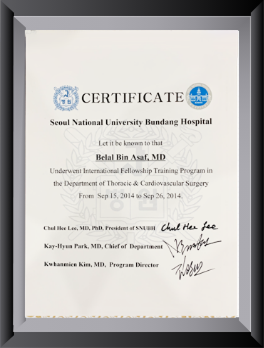
Director, Institute of Chest Surgery, Chest Onco-Surgery & Lung Transplantation — trained at AIIMS, New Delhi, with a Thoracic Surgery fellowship at Seoul National University Bundang Hospital, South Korea; first surgeon in India to perform a Robotic Subxiphoid Thymectomy. View full credentials & experience →


Morning: 10:00AM - 2:00PM
Evening 4:00PM - 6:00PM(Mon to Sat)


